
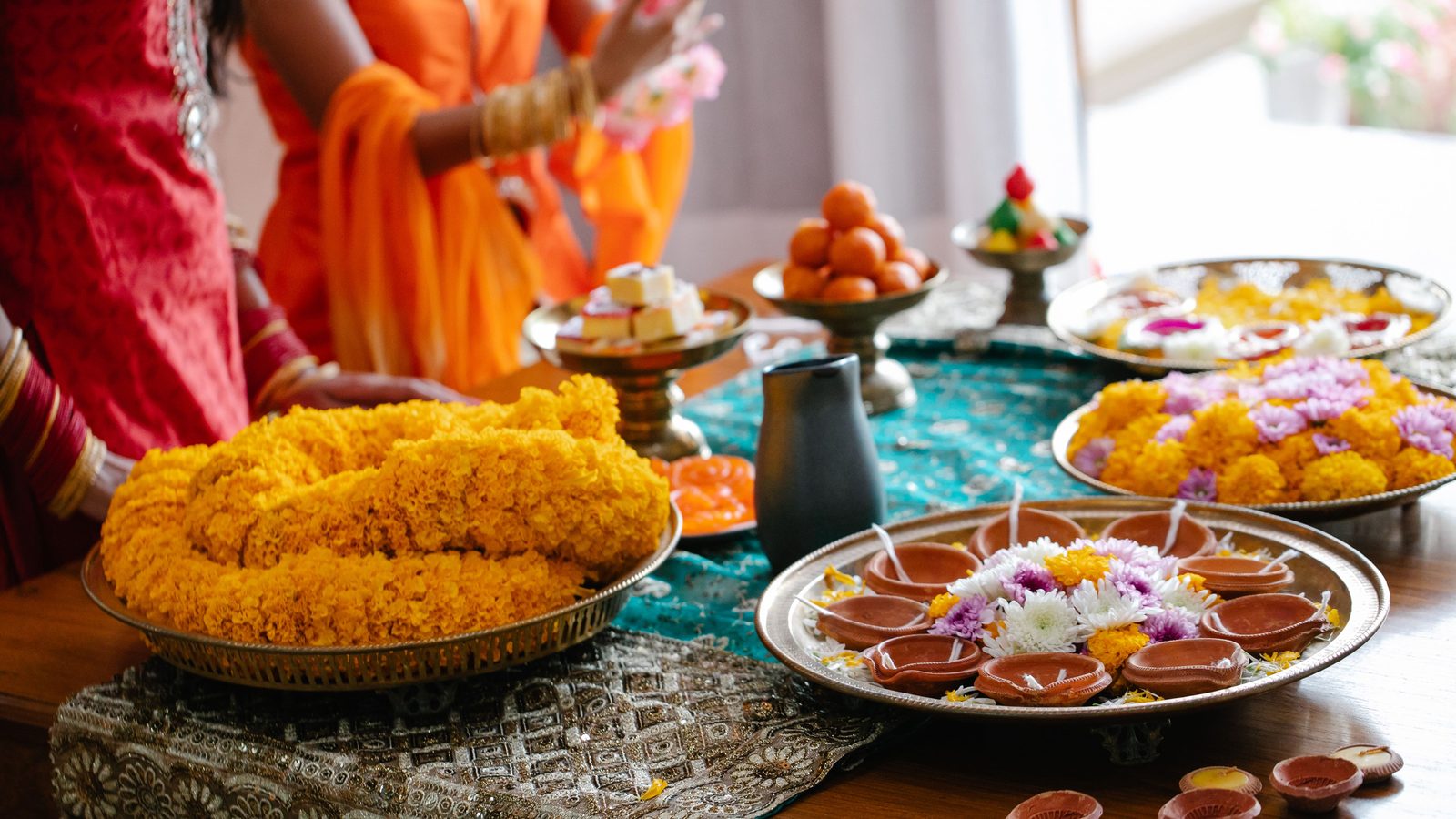
Quick answer: Diwali weight gain usually comes from 5–7 days of extra sweets, fried faral, late dinners and less movement, not from one big meal. Eat a protein-rich meal before parties, keep sweets to 1–2 pieces at a time, walk 10–15 minutes after big meals, and drink water. Most of the “2 kg jump” you see after Diwali is water and salt, and it settles in a few days.
Key takeaways
- Gaining 1 kg of real fat needs roughly 7,700 extra calories. One festive day rarely does that.
- The scale jump after Diwali is mostly water, salt and food weight. Don’t panic-diet.
- Protein first, sweets second, walk after. That’s the whole system.
- Skip “detox” teas and starving the next day. They backfire.
Why Diwali Weight Gain Happens (It’s Not Just the Sweets)
You know the routine. Dhanteras shopping, kaju katli boxes from every neighbour, chakli and chivda on the table all day, a heavy Lakshmi Puja dinner, then Bhai Dooj lunch. By the end of the week, your jeans feel tight and the scale says +2 kg.
So what’s going on? Diwali weight gain is less about one rasgulla and more about a pattern. You eat extra calories for almost a week. At the same time, your sleep gets late, workouts stop, and you sit more because guests keep coming.
In this article, you’ll learn:
- How many calories popular Diwali sweets and snacks really have
- A simple day-by-day plan for the full festival week
- Easy healthy Diwali snacks and swaps
- A 3-day reset for after the festival (no crash diet)
Diwali weight gain: real fat vs water weight
Here’s the good news. Your body stores 1 kg of fat only after about 7,700 calories more than it burns. A single big Diwali day might add 1,000–1,500 extra calories. That’s real, but it’s about 150–200 g of fat, not 2 kg.
So why does the scale jump so fast? Sweets and fried snacks are high in carbs and salt. Your body holds extra water with stored carbs (glycogen) and with salt. Add the weight of food still in your gut, and you can easily see 1–2 kg overnight. Most of this “Diwali weight gain” goes away in 3–5 days once you eat normally.
The small gain that stays
However, there’s a catch. A well-known study published in the New England Journal of Medicine followed adults through the holiday season. Their average gain was small, under half a kilo. But most people didn’t lose it later. Repeat that every festival season and it adds up over the years.
That’s why the goal with Diwali weight gain isn’t “no sweets”. The goal is to stop the small gain from becoming permanent.
Diwali Sweets Calories: What You’re Actually Eating
Most people guess low, and that’s where Diwali weight gain quietly starts. This table gives rough numbers so you can make better choices. Calories change a lot with size, ghee and sugar, so treat these as estimates.
| Diwali sweet / snack | Usual serving | Approx. calories | Brisk walk to burn* |
|---|---|---|---|
| Kaju katli | 1 piece (15 g) | 60–70 | 12–15 min |
| Gulab jamun (with syrup) | 1 piece | 140–170 | 30–35 min |
| Motichoor laddoo | 1 piece (40 g) | 160–190 | 35–40 min |
| Rasgulla | 1 piece | 100–125 | 20–25 min |
| Soan papdi | 1 piece | 100–130 | 20–25 min |
| Besan laddoo | 1 piece | 150–180 | 30–35 min |
| Chakli (fried) | 1 medium | 90–110 | 18–22 min |
| Chivda | 1 small bowl (30 g) | 140–160 | 30 min |
| Shankarpali (fried) | 10 pieces | 120–150 | 25–30 min |
| Dry fruits (mixed) | 1 small handful (30 g) | 160–180 | 35 min |
*Based on about 5 calories per minute of brisk walking for a 65–75 kg adult.
Look at the walking column. One gulab jamun is not a problem. But four laddoos a day for six days is roughly 4,000 extra calories, and you won’t walk that off by accident.
The 7-Day Diwali Weight Gain Plan
This Diwali weight gain plan covers the full festival week, starting two days before Dhanteras. It’s built for normal Indian homes: you’ll still eat sweets, attend parties and enjoy the food. You just do it with a little structure.
| Day | Focus | What to do |
|---|---|---|
| Day 1 | Prep | Plan meals for the week. Stock fruit, curd, paneer, eggs, roasted chana. |
| Day 2 | Hydration habit | Start 2.5–3 L water daily. Begin a 20-minute morning walk. |
| Day 3 (Dhanteras) | Shopping day | Eat a proper lunch before you go out. Carry a fruit or nuts, skip mall junk. |
| Day 4 (Choti Diwali) | Faral control | Put faral in small bowls. No eating straight from the dabba. |
| Day 5 (Lakshmi Puja) | Big day | Light, protein-rich breakfast and lunch. Enjoy dinner and 2 sweets. Walk 15 min after. |
| Day 6 (Padwa) | Balance | Normal dal-roti-sabzi meals. 1 sweet only. Walk 30 min. |
| Day 7 (Bhai Dooj) | Last feast | Enjoy lunch. Light dinner (khichdi, soup, curd). Sleep on time. |
How the Diwali weight gain plan works day to day
On normal days, keep your meals boring and balanced. A plate of dal, sabzi, 2 rotis and curd is perfect. Then spend your “extra” on the foods you actually love during the festival.
On party days, don’t skip meals to dodge Diwali weight gain or “save calories”. You’ll arrive starving and eat five laddoos in ten minutes. Instead, eat a small protein snack before you leave: a bowl of curd, two boiled eggs, a paneer roll or a handful of roasted chana.
5 Smart Rules to Avoid Diwali Weight Gain
1. Protein first, sweets second
Protein keeps you full for longer. When you start a meal with dal, paneer, chicken, eggs or curd, you naturally eat fewer sweets later. Aim for some protein at every meal during the week.
2. The 1-sweet rule
Pick one sweet you truly love, and eat it slowly. Skip the ones you’re eating only because they’re there. Honestly, the fifth piece of soan papdi isn’t adding joy.
3. Use a small plate
This sounds silly, but it works. A quarter plate or katori for faral cuts portions without effort. Also, keep sweet boxes inside a cupboard, not on the dining table.
4. Watch the drinks
Sugary cold drinks, packaged juices and sweet lassi add calories fast. Alcohol at Diwali parties adds even more, and it makes you snack late at night. Stick to water, nimbu pani without sugar, buttermilk or green tea.
5. Sleep on time (as much as you can)
Poor sleep is a hidden cause of Diwali weight gain. Late nights raise hunger the next day. You’ll crave sugar and fried food more. Even during the festival, try to get 7 hours on most nights.
Healthy Diwali Snacks and Easy Swaps
You don’t need to give up faral. Just change a few items. These swaps cut calories while keeping the festive feel.
| Instead of | Try this | Why it helps |
|---|---|---|
| Fried chakli | Baked or air-fried chakli | Much less oil |
| Fried chivda | Roasted poha or makhana chivda | Lighter, more fibre |
| Sugar-heavy laddoo | Dates and dry fruit laddoo | No refined sugar, but keep portions small |
| Gulab jamun | Baked rasgulla or fruit shrikhand | Lower fat |
| Cold drinks | Jaljeera or plain soda with lime | Almost zero calories |
| Namkeen mix | Roasted chana and peanuts | More protein, keeps you full |
If you have an air fryer, it’s the easiest win this Diwali. Many families now make shankarpali, chakli and samosa in it with a teaspoon of oil instead of deep frying. (For recipes, check our sister site SmartCooking.in.)
A quick note on “sugar-free” sweets. Many use dates, jaggery or artificial sweeteners. Dates and jaggery are still sugar for your body. They’re a better choice than refined sugar for some people, but they’re not free calories.
The World Health Organization suggests keeping free sugars below 10% of daily calories, and ideally below 5%. For most adults, 10% is about 50 g, or roughly 10–12 teaspoons, in a whole day. A couple of laddoos can use most of that.
Burn Calories Walking (Even on Busy Festival Days)
You don’t need the gym to beat Diwali weight gain. Walking does a lot of the work, especially at the right time.
Walk after big meals
A 10–15 minute easy walk after lunch or dinner helps your body handle the sugar spike better. Research on post-meal walking shows that even light movement after eating lowers blood sugar rise. So after the puja dinner, take the family for a short walk around the building.
The 10-minute home workout
On days you can’t step out, do this at home. Repeat the circuit 2–3 times.
- Bodyweight squats: 15 reps
- Wall or knee push-ups: 10 reps
- Marching on the spot: 1 minute
- Glute bridges: 15 reps
- Plank: 20–30 seconds
Check the AQI before outdoor walks
Diwali falls in peak pollution season in many north Indian cities. When the air quality index (AQI) is “poor” or worse, skip outdoor runs and long walks. Walk inside your home, use the building corridor, or do the home workout above. People with asthma or heart problems should be extra careful on high-smog days.
Common Diwali Weight Gain Mistakes
- Starving the next day. Skipping meals after a feast makes you overeat by evening. Eat normal meals instead.
- Detox teas and juice cleanses. They mainly make you lose water. Your liver and kidneys already do the detox job.
- “Cheat week” thinking. One festive day is fine. Seven full days of “it’s Diwali, who cares” is where most of the gain comes from.
- Weighing yourself every morning. The scale will swing with water and salt. Weigh once, about 5 days after Bhai Dooj, for a real number.
- Crash dieting after Diwali. It often leads to binge eating later. A gentle reset works better.
Post-Diwali Detox: A Simple 3-Day Reset
Forget the word “detox” in the marketing sense. This is just getting your normal routine back.
Day 1: Go back to home meals. Dal, sabzi, roti or rice, curd and salad. No sweets today. Drink 3 L of water to flush out extra salt.
Day 2: Add a 30–40 minute walk. Include protein in every meal. Finish the leftover sweets by sharing them, not by eating them yourself.
Day 3: Restart your normal workout. Cut down on namkeen and packaged snacks. Sleep by 11 pm.
By day 4 or 5, most of the festival water weight is usually gone. Then weigh yourself. If your Diwali weight gain is 0.5 kg or less, you did great.
Who Should Take Extra Care
If you have diabetes, prediabetes, PCOS, thyroid problems, high blood pressure or heart disease, festival eating needs more planning. Sweets can raise blood sugar quickly, and salty faral can raise blood pressure. Talk to your doctor or dietitian about safe portions before Diwali. For Indian food guidance, the ICMR-National Institute of Nutrition publishes dietary guidelines for Indians.
This article is for general information and isn’t medical advice.
Frequently Asked Questions About Diwali Weight Gain
Q: How much weight do people gain during Diwali?
Many people see 1–2 kg on the scale after Diwali week. Most of that is water, salt and food weight. Real fat gain is usually much smaller, often under half a kilo, unless overeating continues for weeks.
Q: How can I avoid Diwali weight gain without skipping sweets?
Eat protein before parties, keep sweets to 1–2 pieces at a time, use small plates and walk 10–15 minutes after big meals. Drink plenty of water and keep normal meals on non-party days.
Q: Which Diwali sweet has the fewest calories?
Among common sweets, rasgulla and small kaju katli pieces are usually lower in calories than fried, syrupy items like gulab jamun or ghee-heavy laddoos. Portion size still matters most.
Q: How long does it take to lose weight gained during Diwali?
Water weight from the festival usually drops in 3–5 days once you eat normal meals and stay active. Any real fat gain takes a few weeks of normal, balanced eating and regular walking.
Q: Is a post-Diwali detox necessary?
No. You don’t need detox teas or juice cleanses. Go back to home meals, drink water, walk daily and sleep on time. Your body will settle in a few days.
Enjoy Diwali, Then Get Back on Track
Diwali weight gain isn’t something to fear. One sweet won’t ruin your progress, and one big dinner won’t either. What matters is the pattern over the full week. Eat protein first, enjoy the sweets you love, keep moving after meals, and go back to your routine right after Bhai Dooj.
Save this plan, share it with your family WhatsApp group, and follow FitnessGear.in on our WhatsApp channel for more festive fitness tips this season.
4 thoughts on “Diwali Weight Gain: 7-Day Plan to Enjoy Sweets Without Guilt”
Comments are closed.