
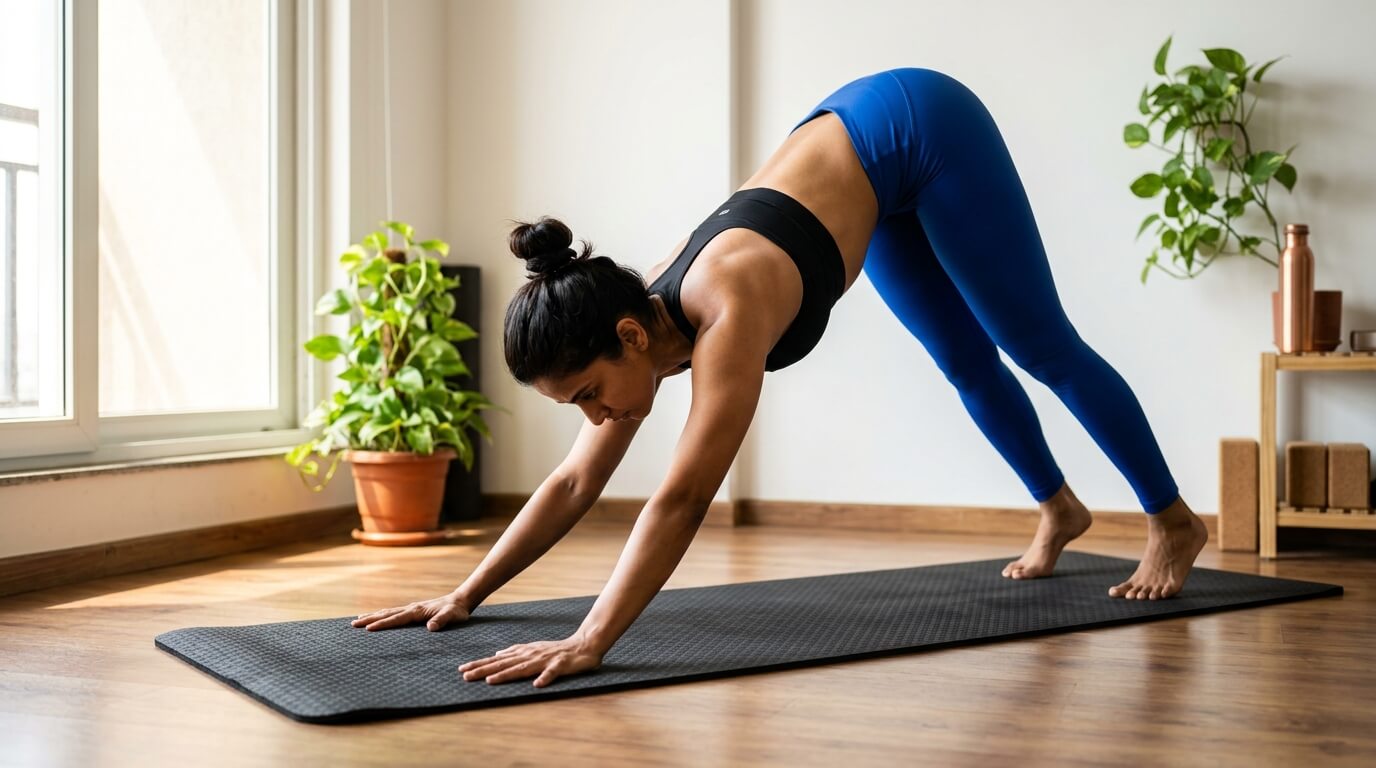
Quick answer: For a yoga mat anti slip and 6mm thick under ₹600, look for a textured surface on both sides, a dense foam that springs back when pressed, and a material that suits you: NBR for cushion, TPE for lighter weight and better grip, PVC for durability. Budget mats work well for home practice, but sweaty hot yoga needs a grippier (and usually pricier) mat.
Key takeaways
- 6mm is a good middle thickness for hard tile and marble floors common in Indian homes.
- Grip depends on surface texture and material, not just the “anti-slip” label.
- NBR mats are soft and cheap. TPE mats are lighter and grippier. PVC lasts longest.
- Clean the mat often. Sweat and dust are the main reasons a mat gets slippery.
Why a Yoga Mat Anti Slip Grip Matters
A slipping mat isn’t just annoying. When your hands or feet slide in Downward Dog or a lunge, you tense up and lose form. That’s how small strains happen.
According to the US National Center for Complementary and Integrative Health, yoga is generally safe for healthy people when done properly. The most common injuries are sprains and strains, mostly in the knee or lower leg. A stable, non-slip mat is one simple way to lower that risk at home. And since the World Health Organization recommends at least 150 minutes of moderate activity a week, a comfortable mat makes regular home practice much easier to stick with.
This guide is based on material properties, brand product listings and what to check on buyer reviews. We haven’t run our own mat tests, so you won’t find invented test results here.
In this article, you’ll learn:
- How thickness affects comfort on Indian floors
- NBR vs TPE vs PVC, explained simply
- 7 checks to make before buying a yoga mat anti slip
- How to care for a budget mat so it lasts
Is 6mm the Right Thickness?
Most Indian homes have tile, marble or stone floors. These are hard on knees, wrists and the spine during kneeling and lying poses.
| Thickness | Best for | Trade-off |
|---|---|---|
| 3–4mm | Balance poses, travel | Less cushion on hard floors |
| 6mm | Most home yoga on tiles | Slightly less stable than thin mats |
| 8–10mm | Floor exercises, sensitive knees | Wobbly in standing balance poses |
A 6mm mat is a balanced middle choice. If you mainly do floor exercises, stretches or core work, a thicker 8mm or 10mm mat may feel better. If you do a lot of standing balance poses, thinner is more stable.
Yoga Mat Anti Slip Materials: NBR vs TPE vs PVC
| Material | Feel | Grip | Weight | Typical budget |
|---|---|---|---|---|
| NBR (nitrile rubber foam) | Soft, cushioned | Moderate | Light | Lowest |
| TPE (thermoplastic elastomer) | Springy, firm | Good when dry | Light | Mid |
| PVC | Firm, dense | Good, lasts long | Heavier | Low to mid |
| Natural rubber | Firm, heavy | Best, even with sweat | Heavy | Highest |
NBR
NBR mats are the cheapest and often the thickest (8–10mm). They’re comfortable for floor work, but the soft foam can compress and stretch over time. Grip is moderate.
TPE
TPE mats are lighter and usually have a more defined texture, which helps grip. They’re a popular step up from NBR. Many 6mm mats are TPE.
PVC
PVC mats are dense and durable. Grip is good when dry. They’re less eco-friendly than TPE or rubber.
Natural rubber
Natural rubber gives the best grip, even with sweat, but it’s heavy, has a rubber smell at first, and costs well above ₹600. Avoid it if you have a latex allergy.
Examples From Brand Stores (Approx., as of 19 Oct 2026)
| Mat | Brand listing | Approx. price (brand store) |
|---|---|---|
| Boldfit NBR Yoga Mat with Carrying Strap | 8mm variant in black | ₹499 |
| Boldfit Pro Align TPE Yoga Mat with Strap | 6mm TPE | ₹899 |
These examples show the price gap: NBR mats fit easily under ₹600, while 6mm TPE mats often cost more on brand stores. Marketplace prices vary widely, and many 6mm mats under ₹600 are sold there. Use the checks below to judge them.
7 Checks Before You Buy a Yoga Mat Anti Slip
- Texture on both sides. The top gives hand grip. The bottom stops the mat sliding on smooth tiles.
- Density. Press a thumb into the mat in photos or videos. A good mat springs back quickly.
- Real thickness. Some listings round up. Read buyer reviews for comments on actual thickness.
- Size. A standard 183cm x 61cm mat fits most people. If you’re taller than about 5’10”, look for a longer mat.
- Smell. A strong chemical smell is common in new mats. Reviews will tell you if it lasts more than a few days.
- Edges and tearing. Recent reviews that mention peeling or tearing within weeks are a warning sign.
- Return policy. Grip is personal. Buy where you can return it.
How to Make Any Mat Less Slippery
- Wash a new mat with mild soap and water to remove the factory coating.
- Keep hands dry. Wipe sweaty palms with a small towel between poses.
- Skip lotion and oil before practice.
- Use a yoga towel on top if you sweat a lot.
- Put it on a dry floor. A damp, freshly mopped floor makes the mat slide.
Care Tips for a Longer Life
- Wipe the mat with a damp cloth after each session.
- Deep clean once a week with mild soap.
- Dry it in the shade. Harsh sunlight can make foam brittle.
- Roll it with the top side facing out to keep edges flat.
Want to add simple equipment to your home practice? See our dumbbell set guide for home gyms.
Who Should Spend More Than ₹600
- Hot yoga or heavy sweaters. Natural rubber or a PU-top mat grips better when wet.
- Daily practice. Cheaper foam may wear out sooner with daily use.
- People with knee or joint pain. A thicker, denser mat may be worth the extra cost.
This article is for general information and isn’t medical advice. If you have joint, back or knee problems, check with a doctor or physiotherapist before starting yoga.
FAQ: Yoga Mat Anti Slip
Q: Which is the best yoga mat anti slip under ₹600?
For pure cushion on a budget, an NBR mat is the cheapest choice. For better grip, look for a TPE mat with texture on both sides, though many cost a little more than ₹600 on brand stores.
Q: Is 6mm thickness good for yoga?
Yes. 6mm is a good balance of cushion and stability for most home practice on tile or marble floors.
Q: Why is my new yoga mat slippery?
New mats often have a light factory coating. Wash it with mild soap and water and let it dry in the shade.
Q: How long does a budget yoga mat last?
It depends on how often you use it and how you care for it. Daily use wears foam mats faster. Watch for thinning, peeling or tearing.
The Bottom Line
A good yoga mat anti slip grip comes from the right material, a textured surface and a clean mat. Under ₹600, an NBR or entry-level TPE mat is enough for most home practice. Check density, texture and recent reviews, and keep the mat clean.
For more home gym buying guides, follow FitnessGear.in.
1 thought on “Best Yoga Mat Anti Slip India 6mm Thick Under 600 2026”
Comments are closed.