
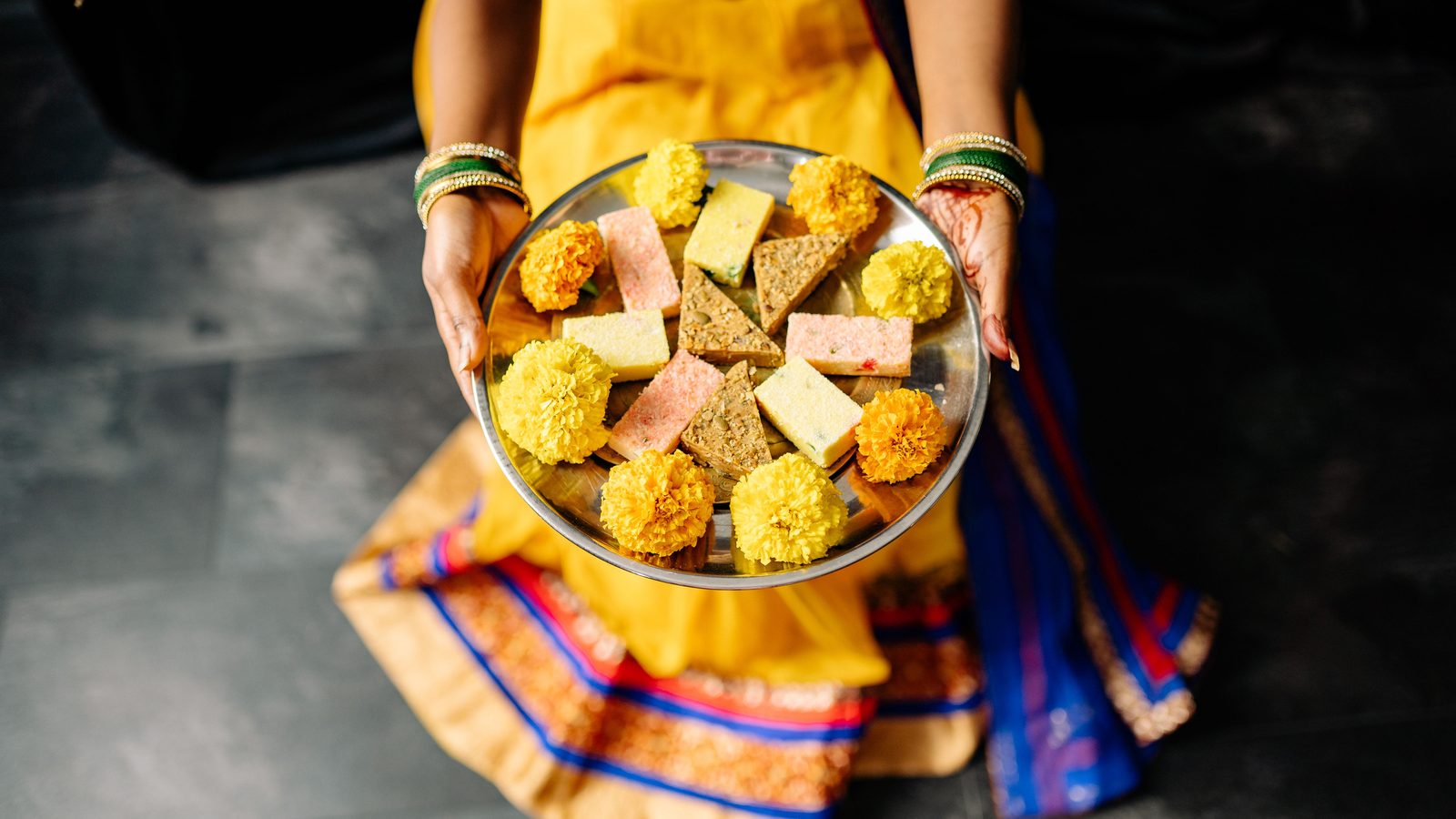
Quick answer: Per piece, kaju katli is usually the lightest of the three at roughly 60–80 calories, because pieces are small and thin. A gulab jamun with syrup is around 140–180 calories, and a besan or motichoor laddoo is around 150–200. Rasgulla (squeezed) and plain sandesh are among the lighter options. Size matters more than the name of the sweet, so check how big the piece is.
Key takeaways
- Kaju katli: ~60–80 kcal per small piece. Gulab jamun: ~140–180. Laddoo: ~150–200.
- The calories in a sweet depend mostly on its weight, ghee and sugar syrup.
- Two small pieces of a light sweet can equal one big laddoo.
- Plan sweets into your day instead of trying to avoid them all week.
Why Diwali Sweets Calories Add Up So Fast
Diwali isn’t one meal. It’s a week or more of boxes arriving at home, plates at every visit and “just one piece” at the office. Each sweet looks small. Together, they can easily add 400–800 calories a day without you noticing.
Knowing rough Diwali sweets calories helps you choose, not avoid. You don’t need to skip mithai. You need to know which piece costs a little and which one costs a lot.
In this article, you’ll learn:
- Approximate calories in 10 popular Diwali sweets, per piece
- Why kaju katli often beats laddoo, and when it doesn’t
- How to read a sweet by its size, ghee and syrup
- A simple daily plan for sweets during Diwali week
- Mistakes that turn a sweet into a whole extra meal
Diwali Sweets Calories per Piece: Comparison Table
These are estimates for typical shop-sized pieces. Recipes, ghee, sugar and size vary a lot, so treat the numbers as ranges, not exact counts. We worked them out from typical piece weights and the fact that most rich mithai carries roughly 4–5 calories per gram (syrup-soaked sweets are lower per gram because of water).
| Sweet | Typical piece | Approx. calories | Why |
|---|---|---|---|
| Kaju katli | 12–15 g | 60–80 | Thin and small, but cashew + sugar is dense |
| Rasgulla (syrup squeezed) | 40 g | 80–110 | Mostly chhena and water |
| Sandesh | 25–30 g | 80–120 | Chhena with less fat than khoa sweets |
| Soan papdi | 20 g | 90–110 | Light and flaky, but ghee + sugar |
| Milk barfi / khoa barfi | 30 g | 120–150 | Khoa and sugar |
| Gulab jamun with syrup | 40–50 g | 140–180 | Fried khoa dough soaked in syrup |
| Kalakand | 35 g | 130–160 | Milk solids and sugar |
| Jalebi | 2 medium coils, 40 g | 150–180 | Deep fried and syrup-soaked |
| Besan laddoo | 35–40 g | 160–200 | Roasted besan, lots of ghee, sugar |
| Motichoor laddoo | 35–40 g | 150–190 | Fried boondi + syrup |
When you line up Diwali sweets calories like this, the surprise for many people is that one large besan laddoo can cost as much as two to three pieces of kaju katli.
Kaju Katli vs Gulab Jamun vs Laddoo: Which Is Best?
Kaju katli
Cashews bring fat and sugar brings the rest, so per gram it’s actually quite rich. It wins only because the pieces are small and thin. Eat four pieces and you’ve matched a laddoo.
Gulab jamun
The fried khoa ball soaks up sugar syrup. Squeezing out some syrup and eating it at room temperature (not dunked in more syrup) saves a little. Mini jamuns are an easy win if the box has them.
Laddoo
Besan and motichoor laddoos are big, dense and made with plenty of ghee or fried boondi. They’re the most filling but also the most calories per piece. Breaking one in half and sharing is the easiest fix.
The winner for fat loss: small pieces you’ll stop at. For most people that’s kaju katli, sandesh or a squeezed rasgulla. The loser is any sweet where you eat more than you planned.
What 150 Calories Looks Like in Activity
Calories make more sense when you picture the walking needed to match them. The NHS guide to calories suggests a typical daily intake of around 2,000 for women and 2,500 for men, so one laddoo is a small share, but several a day add up.
| Sweet | Approx. calories | Rough brisk walk to match* |
|---|---|---|
| 1 kaju katli | 70 | 15 minutes |
| 1 gulab jamun | 160 | 30–35 minutes |
| 1 besan laddoo | 180 | 35–40 minutes |
| 3 mixed sweets | 400+ | 80+ minutes |
*Very rough, for a 65–70 kg adult walking briskly. Your watch may show different numbers.
That’s why “I’ll walk it off” rarely works during Diwali. It’s easier to eat one fewer sweet than to walk an extra hour.
Sugar: The Other Number to Watch
Calories aren’t the only issue. Most mithai is high in added sugar. The WHO recommends keeping free sugars under 10% of daily energy, and ideally under 5% (about 25 g, or 6 teaspoons, a day for an adult). A single syrup-soaked sweet can use up a large part of that.
If you have diabetes or prediabetes, talk to your doctor about how sweets fit your plan this festive season.
A Simple Plan to Manage Diwali Sweets Calories
- Pick your moment. Decide in the morning when you’ll have a sweet: after lunch, or at the evening visit.
- One or two pieces a day. Choose small ones on normal days; save the laddoo for the big day.
- Eat sweets after a meal, not on an empty stomach. You’re less likely to keep picking.
- Share the big ones. Half a laddoo still tastes like Diwali.
- Don’t keep open boxes on the table. Out of sight really does help.
- Keep walking. A 10–15 minute walk after meals helps you feel better and keeps your step count up.
Our guide on what to eat first at every Diwali party covers the rest of the plate.
Mistakes That Double Your Diwali Sweets Calories
- Eating sweets straight from the box while chatting. You lose count after two.
- “Sugar-free” sweets eaten freely. They may still be high in ghee, nuts and calories.
- Skipping meals to “save” calories for sweets. You end up hungrier and eat more.
- Drinking sweet chai or cold drinks alongside sweets.
- Saying yes at every house. A polite “I’ve just had one” works.
Frequently Asked Questions About Diwali Sweets Calories
Q: Which Diwali sweet has the lowest calories?
Per piece, small sweets like kaju katli, sandesh and squeezed rasgulla are usually lowest. Size matters more than the type when you compare Diwali sweets calories.
Q: How many calories are in one gulab jamun?
Roughly 140–180 calories for a typical 40–50 g piece with syrup. Mini jamuns are less.
Q: Is kaju katli healthier than laddoo?
Per gram it’s similarly rich. It works out lighter only because pieces are smaller. Four pieces match one laddoo.
Q: Can I eat sweets and still lose weight during Diwali?
Yes, if you plan 1–2 small pieces a day, keep meals balanced and stay active. Aim to maintain weight in Diwali week rather than lose.
The Bottom Line
Diwali sweets calories vary mostly by size, ghee and syrup. Kaju katli and sandesh are usually the lightest pieces; laddoos and jalebi are the heaviest. Choose small, plan your moment, and enjoy the festival without the scale shock in November.
Save this table for Diwali week, share it with the family group, and follow FitnessGear.in on WhatsApp for more festive fitness tips.
This article is for general information and isn’t medical advice.