
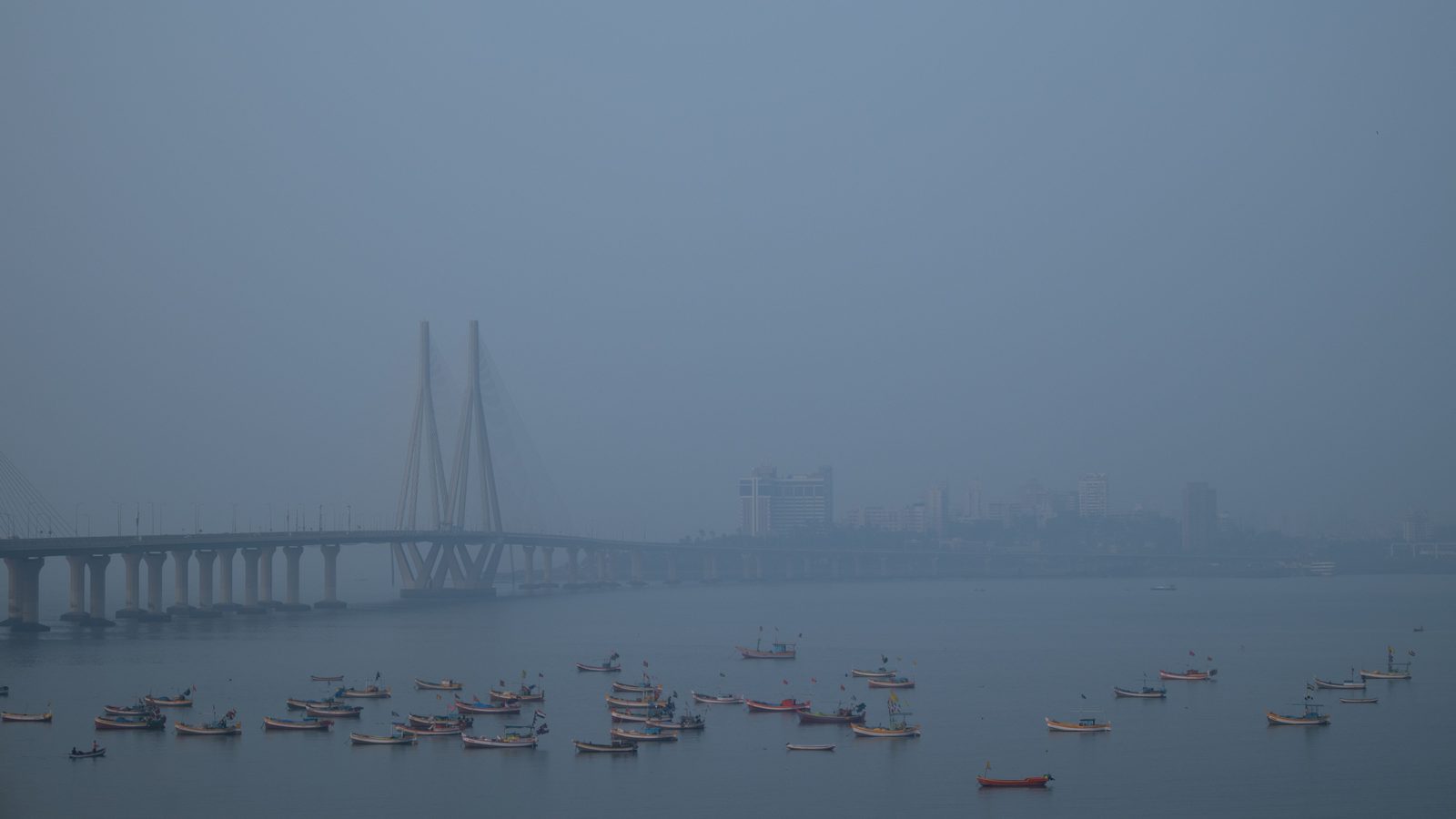
Quick answer: For 24 October, the CPCB’s Sameer app put the citywide Mumbai AQI at 120 (“moderate”), while other reports quoted 322 (“very poor”) without naming the monitor. Both can be “true” because apps differ in scale, station and time window. Before a walk, check the CPCB reading for the station nearest you. Walk normally under 100, go easy between 101 and 200, and move the workout indoors above 200.
Key takeaways
- The official Indian scale is CPCB’s National AQI. Many private apps show the US AQI, which reads higher for the same air.
- A citywide average hides local spikes. On 24 October, Andheri read 206 on one platform while Ghatkopar sat near 54.
- An IMD scientist told Hindustan Times conditions could stay similar for two days, with improvement expected from 27 October.
- Bad-air days don’t have to break your fat-loss routine. Swap the outdoor walk for an indoor one.
In this article, you’ll learn:
- What the Mumbai AQI numbers on 24 October actually were, and where they came from
- Why two apps can show such different numbers
- A simple walk-or-stay-in rule based on the official scale
- How to keep your step count up on bad-air days
What Happened to Mumbai AQI This Weekend
Mumbai’s air got noticeably hazier over the weekend. On Saturday, 24 October, a Hindustan Times report said the citywide AQI on the CPCB’s Sameer app rose to 120, up from 101 the day before. That’s the “moderate” band. Of 24 active stations, 17 were in the moderate range. Malad West was the worst at 171 and Ghatkopar the best at 54.
Private platforms showed higher numbers at some spots. Andheri hit 206 on AQI.in, and Borivali and Bandra-Kurla Complex were in the 189–193 range on IQAir.
At the same time, a widely shared news agency report said Mumbai’s AQI hit 322, “very poor”, and that Delhi had its cleanest 24 October in a decade. That report didn’t name the monitor or station behind the 322.
Experts quoted in the HT report blamed weak winds and poor vertical mixing, which trap dust and smoke near the ground. An IMD scientist said similar conditions were likely for two more days, with improvement expected from 27 October as winds pick up.
Why Mumbai AQI Numbers Don’t Match
If you checked two apps on Saturday and got two different answers, you weren’t imagining it. There are three common reasons.
1. Different scales. India uses CPCB’s National Air Quality Index. Many global apps use the US EPA’s AQI scale. The US scale is stricter for fine dust (PM2.5). Take a day where PM2.5 averages about 60 µg/m³. The Indian scale calls that about 100, “satisfactory”. The US scale calls it roughly 150, “unhealthy”. Same air, different number.
2. Different stations. A citywide figure is an average across stations. If you live near a big construction site or a busy junction, your air can be far worse than the average, or better if you’re near the sea breeze.
3. Different time windows. Some apps show a live hourly reading. The official AQI is based on longer averages. A 7 a.m. spike can look scary on a live app and barely move the daily figure.
So which number should you trust? For decisions in India, use the CPCB reading (Sameer app or the CPCB website) for the station closest to where you’ll actually walk. Use private apps as a second check, and note which scale they use in their settings.
The Official Scale and What It Means for Your Workout
Here’s the CPCB band chart with a plain workout rule next to each. It’s general guidance for healthy adults, not a medical rule.
| CPCB AQI | Category | What to do with your walk or run |
|---|---|---|
| 0–50 | Good | Train outdoors as usual |
| 51–100 | Satisfactory | Fine for most people; sensitive people watch for symptoms |
| 101–200 | Moderate | Keep it easy; shorten long or hard sessions; avoid busy roads |
| 201–300 | Poor | Move hard workouts indoors; a short, easy walk is the limit |
| 301–400 | Very poor | Train indoors |
| 401–500 | Severe | Train indoors; limit time outside |
If you have asthma, heart or lung disease, or you’re pregnant, follow your doctor’s advice over this table. Kids and older adults should step down one band earlier.
Mumbai AQI and Your Morning Walk: A 3-Step Check
- Check the station, not the city. Open the CPCB reading for the station nearest your route.
- Look at the trend. Is it climbing since last night or easing? Weekend haze often lifts by mid-morning when the wind picks up.
- Pick your swap. Under 100, go. Between 101 and 200, walk slower and stay off main roads. Over 200, do the session indoors.
Walking near traffic matters too. Promenades and parks away from main roads usually beat walking along a highway, even on the same AQI day.
Don’t Let Bad Air Stall Your Fat Loss
A few hazy days won’t undo your progress. Skipping movement for a week might. On bad-air days:
- Do an indoor walk at home. Our indoor walking workout gets you 5,000 steps in your living room.
- Use the building stairs at an easy pace if they’re enclosed and not dusty.
- If you run an air purifier, close the windows and train in that room. We looked at whether an air purifier helps home workouts.
- Keep your eating the same. Bad air is not a reason for an extra plate.
Frequently Asked Questions About Mumbai AQI
Q: What was the Mumbai AQI on 24 October 2026?
The CPCB’s Sameer app showed a citywide 120 (moderate), according to Hindustan Times. Some stations read higher on private apps, and another report quoted 322 without naming its source.
Q: Which app shows the official Mumbai AQI?
CPCB’s Sameer app and the CPCB website show readings on India’s National AQI scale. Many other apps use the US scale, which reads higher for the same air.
Q: Is it safe to walk at Marine Drive or in a park right now?
Check the nearest station first. If it’s under 100, a normal walk is fine for most people. Between 101 and 200, keep it shorter and easier. Above 200, walk indoors.
Q: When will Mumbai’s air improve?
An IMD scientist quoted by Hindustan Times expected improvement from 27 October as winds strengthen. Check the live reading each morning, since forecasts can change.
The Bottom Line
Mumbai got two very different numbers for the same day because the apps used different scales, stations and time windows. Check the CPCB reading for your area, follow the simple band rule, and move your walk indoors when it crosses 200. Your routine stays on track either way.
Save this chart for the next hazy morning, share it with your walking group, and follow FitnessGear.in on WhatsApp for air-quality workout updates.
This article is for general information and isn’t medical advice.