
Quick answer: If you’re carrying a lot of extra weight and just starting out, pick cardio that keeps at least one foot on the ground or takes your weight off your legs. Flat walking, a stationary bike, water walking, an elliptical, seated cardio and very gentle step-ups are all good knee friendly cardio choices. Skip running and jumping for the first couple of months. Start with 10 minutes, add a few minutes each week, and let weight loss make your knees’ job easier.
Key takeaways
- In a study of overweight adults with knee arthritis, each kg lost was linked to about 4 kg less force through the knee with every step.
- The WHO recommends at least 150 minutes a week of moderate activity for adults. You can build up to it slowly.
- Cycling and water walking take much of your body weight off your knees.
- This post is for knees that feel fine. If they already hurt, see a doctor or physio first.
In this article, you’ll learn:
- Why knees feel the load more when you’re heavy
- 6 knee friendly cardio options, compared
- A 4-week starter plan
- Form tips that protect your knees
- Warning signs to stop and get checked
Why Heavy Beginners Need Knee Friendly Cardio
If you weigh 95 or 110 kg and decide to “start running from Monday”, your knees get a shock. Every step lands your full body weight, plus extra force from the impact, on two small joints that haven’t been asked to do much for years.
There’s good research on how weight and knee load are linked. A 2005 study in Arthritis and Rheumatism, summarised on PubMed, followed 142 overweight and obese older adults with knee arthritis through an 18-month diet and exercise trial. Each 1 kg of weight lost was linked to roughly a 4 kg drop in the force through the knee per step.
That study was in people who already had arthritis, so it’s not a perfect match for every beginner. But the logic carries over. More body weight means more load per step, and you take thousands of steps a day.
The good news cuts both ways. You don’t have to be light to start. You just need to pick knee friendly cardio first, and the weight you lose makes every later workout easier on your joints.
6 Knee Friendly Cardio Options
1. Flat walking. Free, easy and the best place to begin. Walk on flat ground, wear cushioned shoes and keep your stride short. Skip steep downhill paths at first. Many people find going down harder on the knees than going up.
2. Stationary bike. Your body weight sits on the saddle, not your knees. Set the seat so your knee is only slightly bent at the bottom of each pedal stroke. A seat set too low is a common reason knees ache on a bike. Our exercise bike vs treadmill guide helps if you’re thinking of buying one.
3. Water walking or swimming. Water holds up part of your weight, so your knees carry less. Walking across the shallow end of a pool is a great start if you can’t swim yet. Some city pools and clubs run beginner or women-only slots, so ask.
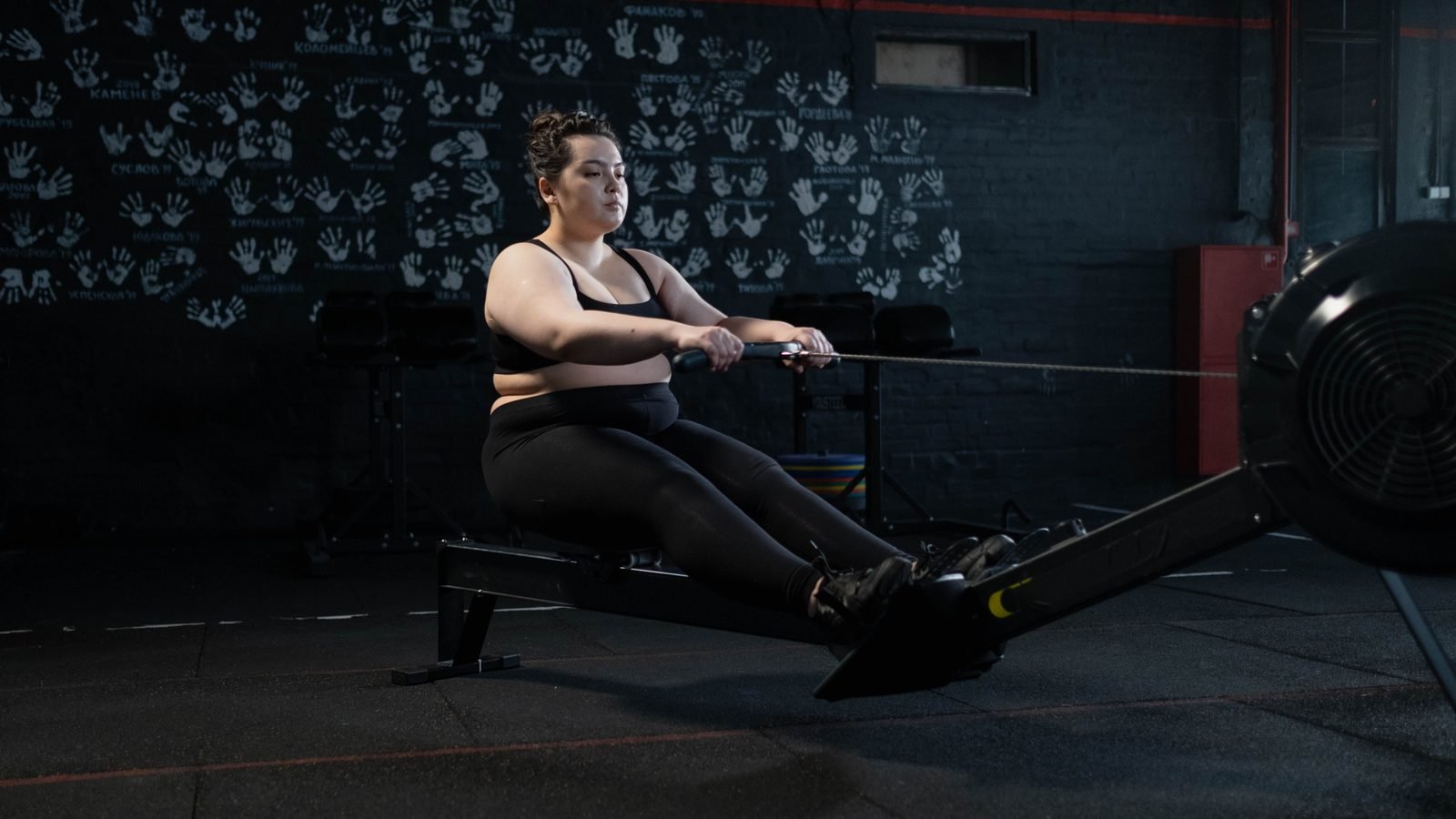
4. Elliptical (cross trainer). Your feet never leave the pedals, so there’s no landing impact. It’s a good gym option once walking feels easy. A rowing machine is another impact-free gym choice, though it bends the knee further, so keep the slide short at first.
5. Seated or chair cardio. Arm circles, seated marching and seated punches raise your heart rate with zero knee load. Useful on days your legs are sore, or if standing for long is hard.
6. Gentle incline walking. A slight uphill slope burns more than flat walking and is usually gentler on knees than going downhill. Keep it gentle. Our incline walking plan shows how to build up.
| Option | Knee load | Cost | Good for |
|---|---|---|---|
| Flat walking | Low to moderate | Free | Everyone, daily base |
| Stationary bike | Low | Gym or a bike at home | Heavy beginners, rainy or foggy days |
| Water walking | Very low | Pool fee | Very heavy beginners, sore joints |
| Elliptical | Low | Gym | Building fitness without impact |
| Chair cardio | None | Free | Rest days, limited mobility |
| Gentle incline walk | Low to moderate | Free or treadmill | More burn without running |
What to Avoid for Now
These aren’t bad forever. They’re just too much, too soon, for most heavy beginners:
- Running and jogging, especially on hard roads
- Jumping: skipping, jumping jacks, burpees and box jumps
- Deep squats and lunges with your knee pushed far past your toes
- Long stair sessions or steep downhill walks
- Weighted walking. Adding a vest or ankle weights adds load you don’t need yet. Our post on walking with weights explains why.
Once you’ve lost some weight and built a few months of regular cardio, you can try short jog intervals if you want to.
A 4-Week Knee Friendly Cardio Starter Plan
The WHO recommends at least 150 minutes a week of moderate physical activity for adults. Don’t aim for that on day one. This plan gets you close by week 4.
| Week | Sessions | Each session | Weekly total |
|---|---|---|---|
| 1 | 5 days | 10 min flat walk or bike | 50 min |
| 2 | 5 days | 15 min, mix walk and bike | 75 min |
| 3 | 5 days | 20 min, add 5 min water walking or elliptical if you can | 100 min |
| 4 | 5 days | 25 to 30 min at a pace where you can talk but not sing | 125 to 150 min |
Two more things that help:
- Split it up. Two 10-minute walks count as well as one 20-minute walk.
- Add two short strength sessions a week. Sit-to-stand from a chair and wall push-ups build the thigh muscles that support your knees.
Form Tips That Protect Your Knees
- Shoes matter. Cushioned walking shoes that fit well are worth more than any gadget.
- Short steps. A long stride lands harder on the heel and knee.
- Warm up for 3 to 5 minutes. Slow walking or seated marching. It matters more in cold winter mornings.
- Keep knees in line with your toes on the bike and during sit-to-stands. Don’t let them cave inward.
- Pick soft surfaces when you can. A park track or treadmill is kinder than a broken footpath.
- Drink water. You’ll feel better on longer sessions. Our winter hydration guide covers why thirst goes quiet this time of year.
Warning Signs to Stop and Get Checked
Some muscle soreness in the first two weeks is normal. Joint pain is different. Stop and see a doctor or physiotherapist if you notice:
- Knee pain that’s sharp, or that gets worse during exercise
- Swelling, warmth or redness around the knee
- The knee giving way or locking
- Pain that wakes you up at night
- Pain that hasn’t eased after a week of rest
If you have diabetes, heart disease, high blood pressure or a lot of weight to lose, a check-up before you start is a good idea anyway.
Frequently Asked Questions About Knee Friendly Cardio
Q: What is the best knee friendly cardio for very heavy beginners?
A stationary bike or water walking, because both take much of your body weight off your knees. Flat walking is the easiest free option.
Q: Is walking bad for knees if I’m overweight?
For most people, no. Flat walking in good shoes, built up slowly, is a gentle start. If your knees already hurt, get them checked first.
Q: When can I start running?
There’s no fixed date. Many people wait until they’ve lost some weight and can walk briskly for 30 minutes without knee pain, then add short jog intervals.
Q: Will knee friendly cardio still help me lose weight?
Yes. Fat loss depends on regular activity and a calorie deficit, not on impact. Pair your cardio with sensible eating and steady sleep.
Start Small, Stay Consistent
Knee friendly cardio means you don’t have to wait until you’re lighter to start. Walk on the flat, use a bike or pool if you can, avoid running and jumping for now, and build up week by week. Every kg you lose makes the next workout easier on your knees.
Save this post, share it with a friend who keeps saying “my knees won’t let me”, and follow our WhatsApp channel for more simple weight-loss fixes.
This article is for general information and isn’t medical advice.