
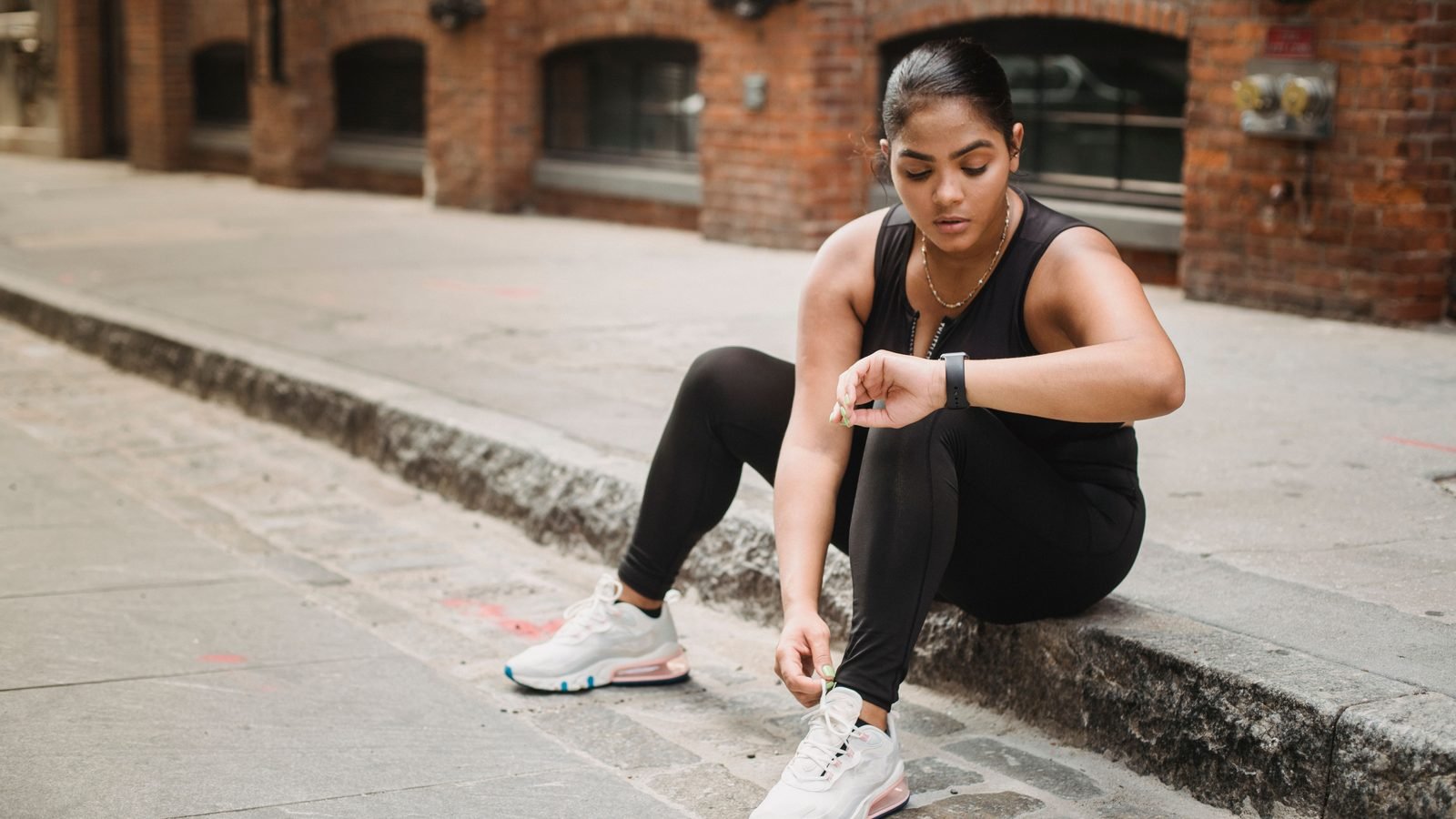
Quick answer: Smartwatch GPS distance drifts because satellite signals bounce off buildings, get blocked by trees, and are weaker when you start walking before the watch has a lock. Watches also smooth your route, which can cut corners on twisty paths. A few percent of error is normal; one study of eight sport watches found average errors of about 3% to 6%. Waiting for a GPS lock, syncing your watch, calibrating it and testing on a known route usually brings the number closer.
Key takeaways
- Under open sky, phone-grade GPS is typically accurate to about 5 metres. Near buildings and trees it gets worse.
- Watches tend to under-read distance in cities and forests, and do best in open areas like a track.
- Starting before the GPS lock, using phone-connected GPS with the phone left behind, or using a battery-saving GPS mode all add error.
- Test your watch on a measured route before you blame the hardware.
In this article, you’ll learn:
- How smartwatch GPS measures your walk
- Why distance drifts, with what research says
- How much error is normal
- 6 fixes you can try this week
- How GPS compares with step-based distance
How Smartwatch GPS Measures Your Walk
Your watch doesn’t measure distance directly. It records your position every second or few seconds, then joins the dots. Total distance is the sum of all those little lines.
Each dot has some error. According to the US government’s GPS accuracy page, GPS-enabled smartphones are typically accurate to within about 4.9 metres under open sky, and accuracy worsens near buildings, bridges and trees. Watches use similar small antennas, so the same limits apply.
When the dots wobble left and right of your real path, the line can come out longer. When the watch smooths the route or records fewer dots, it cuts corners and comes out shorter. That’s why the same morning walk can read 3.1 km one day and 2.9 km the next.
Many watches also use the accelerometer and your stride length to fill gaps when GPS is weak. That’s why calibration matters (more on that below).
Why Your Smartwatch GPS Distance Drifts
Here are the usual reasons, roughly in order of how often they cause trouble:
- Tall buildings. Signals bounce off walls before reaching your wrist. In dense colonies and narrow lanes, the track zigzags or jumps.
- Tree cover. Shaded parks and avenue roads weaken the signal.
- Starting too early. If you press start before the watch shows a GPS lock, the first few hundred metres can be wrong or missing.
- Connected GPS without the phone. Some watches borrow the phone’s GPS. Leave the phone at home and the watch guesses distance from steps instead.
- Battery-saving modes. Some watches record GPS less often to save power. Fewer points means more corner-cutting on twisty routes.
- Old satellite data. Watches that haven’t synced for days take longer to find satellites.
- Short laps. Walking small circles in a society compound is hard for any GPS. Each turn adds a bit of error.
How Much Smartwatch GPS Error Is Normal?
A 2020 study in JMIR mHealth and uHealth tested eight sport watches from Apple, Coros, Garmin, Polar and Suunto in urban areas, forests and on a track, while walking, running and cycling. What it found:
- Mean absolute errors ranged from about 3.2% to 6.1% across the watches.
- Distances were generally underestimated in urban and forest areas, by up to about 9%.
- On the track, most watches slightly overestimated but were accurate.
- Running showed higher error than walking or cycling for most devices.
These were premium sport watches. Budget smartwatches weren’t tested, so we can’t say how they compare, and real results depend on your route.
| Your route | What to expect | Likely direction |
|---|---|---|
| Open ground or running track | Closest to real distance | Slightly over or spot on |
| Wide road with low buildings | Small error | Either way |
| Dense city lanes, tall buildings | Larger error, jumpy track | Often under |
| Shady park or tree-lined road | Larger error | Often under |
| Small compound laps | Corners cut | Under |
| Treadmill or indoors | No GPS; step-based estimate | Either way, needs calibration |
For a 5 km walk, a 5% error is about 250 metres. That’s annoying if you’re chasing a number, but it won’t change your fitness.
6 Fixes for Smartwatch GPS Distance
1. Wait for the lock. Open the workout, stand still outside and wait until the watch shows GPS is ready. Garmin’s manual guidance on satellite reception says to go to an open area away from tall buildings and trees and stay still for a few minutes.
2. Sync often. The same Garmin page notes that a synced watch downloads several days of satellite data, which helps it find satellites faster. Other brands work in a similar way through their apps.
3. Calibrate your stride. Apple’s calibration guide asks you to do an Outdoor Walk or Run for about 20 minutes on level ground with good GPS, and to repeat it at each pace you use. Many other brands have a similar step or stride calibration option in their app.
4. Check your GPS setting. If your watch uses connected GPS, carry the phone. If it has its own GPS, look for an accuracy or “all systems” setting and turn off power-saving GPS for walks where distance matters.
5. Choose a better route for the record. If you care about the number, walk a wide road or a ground loop rather than narrow lanes.
6. Test on a known distance. A standard 400 m running track is the easiest benchmark. Walk five laps in lane 1 (the inside lane, which is where the 400 m is measured), so 2 km in total, and compare what your watch shows. Expect it to read slightly over, since you won’t hug the inside line perfectly.
If you’re in the market for a new watch, our smartwatch for gym beginners guide covers what matters at different budgets. Built-in GPS (not just connected GPS) is the feature to check if outdoor distance matters to you.
Smartwatch GPS vs Step Counting
Your watch has two ways to estimate distance: GPS and steps times stride length. They fail in different ways.
| Method | Good at | Weak at |
|---|---|---|
| GPS | Open roads, longer walks, varied pace | Buildings, trees, tiny laps, indoors |
| Steps × stride | Treadmill, indoors, crowded lanes | Pace changes, slopes, uncalibrated stride |
If your step count looks off too, our step count accuracy test shows how to check it in five minutes.
Frequently Asked Questions About Smartwatch GPS
Q: Why does my smartwatch show less distance than Google Maps?
A map measures the route you planned, usually along the middle of the road. Your watch records where you actually walked, with some GPS error and smoothing. In built-up areas, watches often read a little short.
Q: Is my smartwatch GPS broken if it’s off by 200 metres on a 4 km walk?
Probably not. That’s about 5%, which is within the range seen in research for sport watches. Test on a known distance before assuming a fault.
Q: Does smartwatch GPS work without my phone?
Only if the watch has built-in GPS. Watches with connected GPS need the phone nearby, and without it they estimate distance from steps.
Q: Will a firmware update fix GPS drift?
Sometimes. Brands do improve GPS processing in updates, so keep the watch and app updated. But updates can’t fix tall buildings or tree cover.
Trust the Trend, Not One Walk
Smartwatch GPS is good, not perfect. Expect a few percent of drift, more in crowded lanes and leafy parks, less on open ground. Wait for the lock, sync and calibrate, and test on a track once. After that, compare your walks over weeks, not day to day.
Save this for your next morning walk, share it with a friend whose watch “lost” a kilometre, and follow our WhatsApp channel for more wearable tips.