
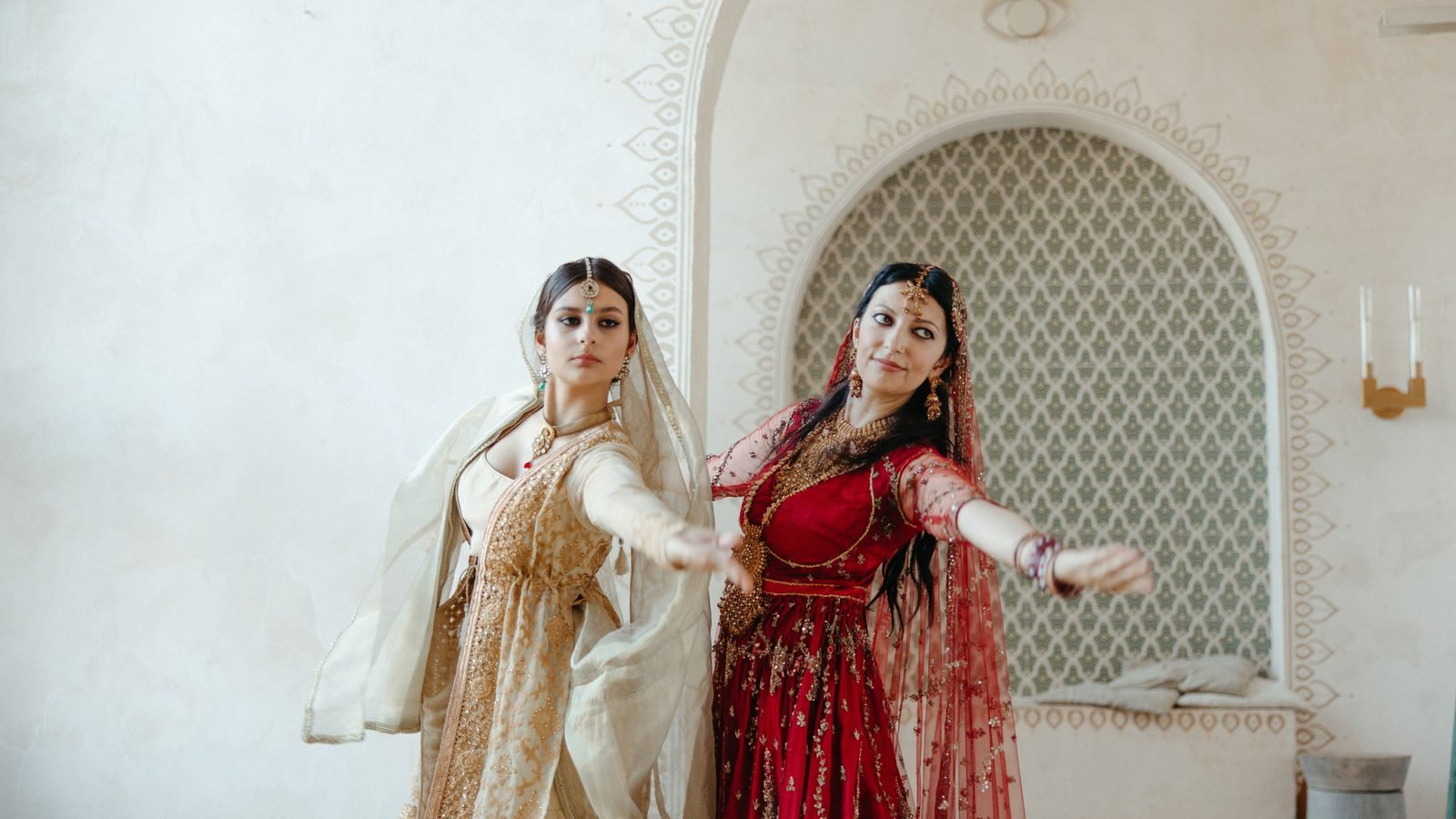
Quick answer: Sangeet dance practice is real exercise, but it burns less than most people think. Using research values from the Compendium of Physical Activities, a 65 kg person doing steady cultural or folk-style dancing burns roughly 290 to 325 kcal in an hour of non-stop dancing. A typical rehearsal, with half the time spent learning steps and standing around, works out closer to 190 kcal. That’s about the same as 35 to 40 minutes of brisk walking.
Key takeaways
- The Compendium rates “ethnic or cultural dancing” at 4.5 METs and moderate folk dancing at 5.0 METs.
- Vigorous, high-energy dancing reaches 9.8 METs, but few people keep that up for a full song list.
- A one-hour rehearsal often has only 25 to 35 minutes of real dancing.
- Sangeet practice is a good bonus on busy wedding weeks. It won’t replace your food plan.
In this article, you’ll learn:
- What the research says about dance and calories
- How to work out your own number in one line of maths
- What a realistic rehearsal actually burns
- How sangeet practice compares with walking
- How to make rehearsals count as a proper workout
Does Sangeet Dance Practice Count as Cardio?
Yes. If your heart rate goes up and you’re breathing harder for a few minutes at a time, that’s cardio. Sangeet dance practice usually means repeating the same 3 or 4 songs, learning steps, then running the whole routine a few times. The full run-throughs are the part that counts most.
The catch is the stop-start nature of it. Someone fixes the speaker. Your cousin forgets the hook step. The choreographer explains the formation again. All of that is standing, and standing burns very little.
So the honest answer is that sangeet dance counts as cardio during the minutes you’re actually dancing. The rest of the evening is mostly a social event, which is fine, just not a workout.
The Research: MET Values for Dancing
The best public source for exercise energy cost is the Compendium of Physical Activities. It gives each activity a MET value. One MET is roughly what your body burns sitting quietly. An activity at 5 METs uses about five times that.
There’s no “Bollywood” or “bhangra” entry. The closest matches are below.
| Compendium activity | Code | MET | Closest sangeet version |
|---|---|---|---|
| Ballroom, slow (slow dancing) | 03040 | 3.0 | Couple’s slow song, gentle swaying |
| Ethnic or cultural dancing | 03025 | 4.5 | Typical sangeet routine at a steady pace |
| Folk dancing, moderate effort | 03033 | 5.0 | Garba-style or group folk steps |
| Ballroom, fast | 03030 | 5.5 | Upbeat couple’s number |
| Nightclub or folk dancing, vigorous | 03031 | 9.8 | Full-energy bhangra-style number, non-stop |
The inactivity section rates standing quietly at 1.3 METs. That’s what most of your break time looks like.
How to Work Out Your Own Sangeet Dance Calories
The usual estimate is simple:
Calories = MET x body weight in kg x hours
So a 65 kg person dancing at 4.5 METs for 1 hour burns about 4.5 x 65 x 1 = 292 kcal.
This is a gross number. It includes the roughly 1 MET your body would burn anyway, sitting on the sofa. The extra burn from dancing is a little lower. It’s also an average. Your real number depends on how big your moves are, how fit you are, and how much you actually rest.
Here’s what one hour of continuous dancing looks like at different body weights:
| Body weight | Slow (3.0) | Cultural (4.5) | Folk moderate (5.0) | Vigorous (9.8) |
|---|---|---|---|---|
| 55 kg | ~165 kcal | ~248 kcal | ~275 kcal | ~539 kcal |
| 65 kg | ~195 kcal | ~293 kcal | ~325 kcal | ~637 kcal |
| 80 kg | ~240 kcal | ~360 kcal | ~400 kcal | ~784 kcal |
Look at the vigorous column with care. Dancing at 9.8 METs for a whole hour is close to running. Most people at a family rehearsal can do it for one song, then need a break.
What a Real Rehearsal Burns
Let’s be honest about a normal evening of sangeet dance practice. Say you’re 65 kg and the session lasts an hour.
- 30 minutes of dancing at 4.5 METs: about 146 kcal
- 30 minutes standing, watching, learning steps at 1.3 METs: about 42 kcal
- Total: about 190 kcal
If you’re 80 kg, the same session comes to around 230 kcal. If you’re 55 kg, around 160 kcal.
Your smartwatch may show a much bigger number. Wrist trackers estimate calories from heart rate and movement, and those guesses can be well off. Our guide on why smartwatch calories and steps don’t match explains why. The Compendium-based estimate is the safer one to plan with.
Sangeet Dance vs a Brisk Walk
The Compendium rates brisk walking at 3.5 to 3.9 mph (about 5.6 to 6.3 km/h) at 4.8 METs. That’s almost the same as steady sangeet dance practice.
| Activity (65 kg person) | 30 minutes | 60 minutes |
|---|---|---|
| Brisk walk (4.8 METs) | ~156 kcal | ~312 kcal |
| Steady sangeet dancing (4.5 METs) | ~146 kcal | ~293 kcal |
| Typical stop-start rehearsal | ~95 kcal | ~190 kcal |
| Full-energy bhangra-style dancing (9.8 METs) | ~319 kcal | not realistic for most |
So on a rehearsal night, it’s fair to skip your evening walk if you actually danced for 30 minutes or more. It’s not fair to also add an extra dessert “because you danced”. That’s the same trap our post on being hungry after walking talks about.
How to Make Sangeet Practice a Proper Workout
A few small changes turn a casual rehearsal into real exercise:
- Run the full routine back to back. Three full run-throughs without a long break keep your heart rate up.
- Go big on the moves. Bigger arm swings, deeper knee bends and more jumps raise the effort.
- Warm up first. Five minutes of marching, arm circles and gentle squats lowers the chance of a pulled calf on the first fast song.
- Drink water, not just chai. Rehearsals often run late, with sweets and fried snacks on the side.
- Use the talk test. If you can talk but not sing, you’re in the moderate zone. The WHO recommends at least 150 minutes of moderate activity a week, and dance minutes can count towards it.
- Protect your knees and ankles. Dance on a flat, non-slippery floor, in shoes or with good grip, not socks on tiles.
What Sangeet Dance Can and Can’t Do Before the Wedding
What it can do:
- Add 100 to 250 kcal of activity on busy evenings when you can’t walk
- Keep you moving during the weeks when work and shopping eat your free time
- Lift your mood and energy, which helps you stick to your food plan
What it can’t do:
- Undo a heavy wedding-week diet on its own
- Spot-reduce belly or arm fat
- Make up for poor sleep, which tends to push up snacking
If you practise four evenings a week for the last two weeks, that’s roughly 750 kcal a week for a 65 kg person. Helpful, yes. Life-changing, no. Your plate still does most of the work.
Frequently Asked Questions About Sangeet Dance Calories
Q: How many calories does one hour of sangeet dance burn?
For steady dancing, roughly 250 to 400 kcal depending on your weight. A stop-start rehearsal is usually closer to 160 to 230 kcal.
Q: Is bhangra better for weight loss than a slow dance?
It burns more per minute. Vigorous folk-style dancing is rated at 9.8 METs against 3.0 for slow dancing. But you’ll only keep it up for short bursts.
Q: Can I replace my walk with sangeet dance practice?
On days you dance for at least 30 minutes, yes. On days with more chatting than dancing, a 20-minute walk is still worth doing.
Q: Will sangeet dance practice help me lose weight before the wedding?
It helps a little, and it’s fun. Weight loss in 2 to 4 weeks still depends mainly on what you eat.
Dance, Enjoy, Then Do the Maths
Sangeet dance practice is honest cardio for the minutes you’re really moving. Count it like a brisk walk, not like a gym session, and don’t eat it back with extra sweets. Then enjoy the night itself, when it’s the only workout you need.
Save this post, share it with your sangeet group, and follow our WhatsApp channel for more wedding-season fitness tips.
This article is for general information and isn’t medical advice.
1 thought on “Sangeet Dance Practice as Cardio: Honest Calorie Maths”
Comments are closed.