
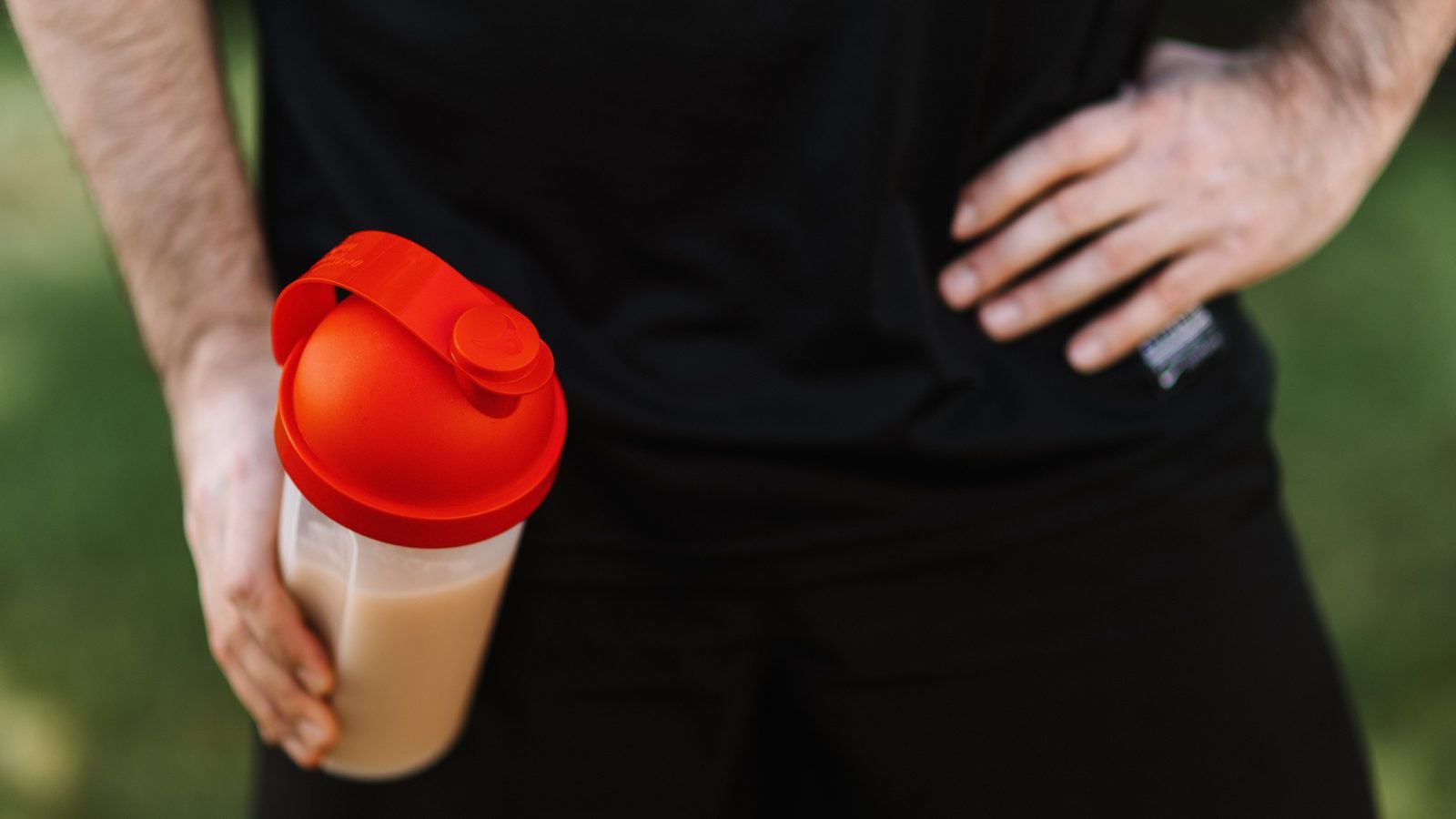
Quick answer: You don’t need a protein shake for weight loss. What helps is enough protein across the day while you eat fewer calories, and most people can get that from dal, curd, paneer, eggs, chicken or fish. ICMR-NIN’s dietary guidelines say protein powders are unnecessary for normal healthy life. A shake can still be handy if your meals are short on protein and you struggle to fix that with food, but count its calories.
Key takeaways
- Higher protein diets help a little with fat loss and with keeping muscle, but only when total calories are in check.
- ICMR-NIN advises getting good-quality protein from food combinations, and says powders are unnecessary for most healthy people.
- A shake is a convenience, not a fat burner. Mixed in full-fat milk with sugar, it can add more calories than you think.
- Read the label: protein per scoop, calories, added sugar and serving size.
In this article, you’ll learn:
- What research says about protein and weight loss
- What India’s dietary guidelines say about protein powders
- When a protein shake for weight loss makes sense
- Food swaps that do the same job
- How to read a protein powder label
Does a Protein Shake for Weight Loss Actually Work?
The short version: protein helps, the shake itself doesn’t do anything special.
A 2012 meta-analysis in the American Journal of Clinical Nutrition by Wycherley and colleagues pooled 24 trials with 1,063 adults. Everyone was on a calorie-reduced diet. People on the higher protein version lost a little more weight, about 0.79 kg more on average over roughly 12 weeks, and about 0.87 kg more fat. They also kept slightly more lean mass. Greater fullness was reported in 3 of the 5 studies that measured it.
That’s a modest effect. It came from overall diet, not from shakes in particular, and it only showed up when calories were already reduced.
So a protein shake for weight loss works the same way an extra bowl of dal or a boiled egg works. It adds protein. Whether you lose weight still depends on your total calories across the day.
What ICMR-NIN Says About Protein Powders
India’s own advice is clear. The ICMR-NIN Dietary Guidelines for Indians has a full guideline on this: get good-quality protein and essential amino acids through the right combination of foods, and avoid protein supplements to build muscle mass.
The points it lists are useful for anyone on a weight-loss plan:
- Combining cereals with pulses in a 3:1 ratio improves the protein quality of a meal. Think rice and dal, or roti and rajma.
- Vegetarians can meet their needs with recommended amounts of pulses, beans, peas and milk or curd.
- Non-vegetarians can meet their needs with fish, poultry, meat or eggs.
- Most athletes can get enough protein through food, and protein powders are unnecessary for normal healthy life.
- Using excess protein supplements for long periods can affect health.
If the guidelines say most athletes don’t need powder, a person walking 8,000 steps a day to lose 5 kg probably doesn’t either.
When a Protein Shake for Weight Loss Can Help
There are real situations where a shake is the easier option:
- Your meals are mostly carbs. Poha for breakfast, rice and sabzi for lunch, roti and aloo for dinner. If you can’t easily add dal, curd, paneer or eggs, a shake fills the gap.
- You skip breakfast or eat on the go. A shake is quicker than cooking, and better than biscuits with chai.
- You’ve started strength training. Protein supports muscle repair, and keeping muscle while losing fat matters.
- You get very hungry between meals. Some people find a protein drink keeps them full longer. Our post on hunger after walking has more ideas.
Even then, it’s a tool for a gap in your diet. If your plate already has protein at each meal, a shake mostly adds calories.
Shake vs Food: Same Job, Different Trade-Offs
| Protein shake | Food sources (dal, curd, paneer, eggs, chicken) | |
|---|---|---|
| Convenience | Very quick | Needs cooking or planning |
| Fibre | Usually little or none | Dal, chana and rajma add fibre |
| Other nutrients | Depends on the brand | Iron, calcium, B vitamins and more |
| Fullness | Liquid, may feel less filling for some | Chewing and fibre help fullness |
| Cost | You pay for the tub | Often cheaper per day |
| Calorie trap | Milk, sugar, banana, peanut butter add up fast | Ghee, fried prep and gravies add up |
| ICMR-NIN view | Unnecessary for most healthy people | Recommended way to meet protein needs |
The calorie trap is the one that catches people. A scoop in water is one thing. A scoop blended with full-fat milk, two bananas, honey and peanut butter can turn into a full meal. If you use a shake, treat it as part of your day’s food, not something extra on top.
Fat matters here too. Our ghee for weight loss guide shows how quickly small additions change the daily total.
How Much Protein Do You Need?
The Harvard T.H. Chan School of Public Health’s Nutrition Source cites the US National Academy of Medicine recommendation of 0.8 g of protein per kg of body weight a day as the baseline. For a 70 kg adult, that’s about 56 g a day. Your own needs can differ with age, activity and health, so a dietitian can help you set a target.
The same Harvard page warns that protein powders aren’t regulated by the US FDA for safety, and that some contain large amounts of added sugar and calories. That’s another reason to read labels carefully.
Reading a Protein Powder Label
If you do buy a tub, check these five things before you pay:
- Protein per scoop. Compare brands on the same scoop or per 100 g, not on the front-of-pack claim.
- Calories per serving. Some “mass” or “weight gainer” products are built for gaining weight. Avoid them on a fat-loss plan.
- Added sugar. Look at the sugar line in the nutrition table.
- Serving size. Two scoops on the label means double the calories if you only counted one.
- FSSAI licence number and batch details. Buy from the brand’s own store or a trusted seller.
People with kidney disease or other medical conditions should talk to a doctor before increasing protein or starting supplements.
If you’ll be shaking it at the office, our guide to leak-proof protein shaker bottles can save you a stained bag.
Frequently Asked Questions About Protein Shake for Weight Loss
Q: Can I replace dinner with a protein shake to lose weight?
You can, but it’s rarely needed, and it’s easy to get hungry later and overeat. A lighter dinner with dal, sabzi and a roti, or eggs and salad, does the same job with more nutrients.
Q: Is a protein shake for weight loss safe every day?
For most healthy adults, one serving a day as part of a balanced diet is generally fine. ICMR-NIN warns that excess protein supplements over long periods can affect health, so don’t keep stacking scoops.
Q: Should I drink it with milk or water?
Water keeps calories lower. Toned milk adds protein and calories. If you’re counting calories, pick one and include it in your daily total.
Q: Will a protein shake help me lose belly fat?
Not directly. No food burns fat from one area. Fat loss comes from a steady calorie deficit, activity and enough protein and sleep.
The Honest Answer
A protein shake for weight loss isn’t needed for most people. Eat protein at every meal from dal, curd, paneer, eggs or chicken, keep calories in check and keep walking. Use a shake only to fill a real gap, and count it. Save this post before you buy that tub, share it with a friend who’s thinking about one, and follow our WhatsApp channel for more fat-loss tips.
This article is for general information and isn’t medical advice.
1 thought on “Protein Shake for Weight Loss: Needed or Not?”
Comments are closed.