
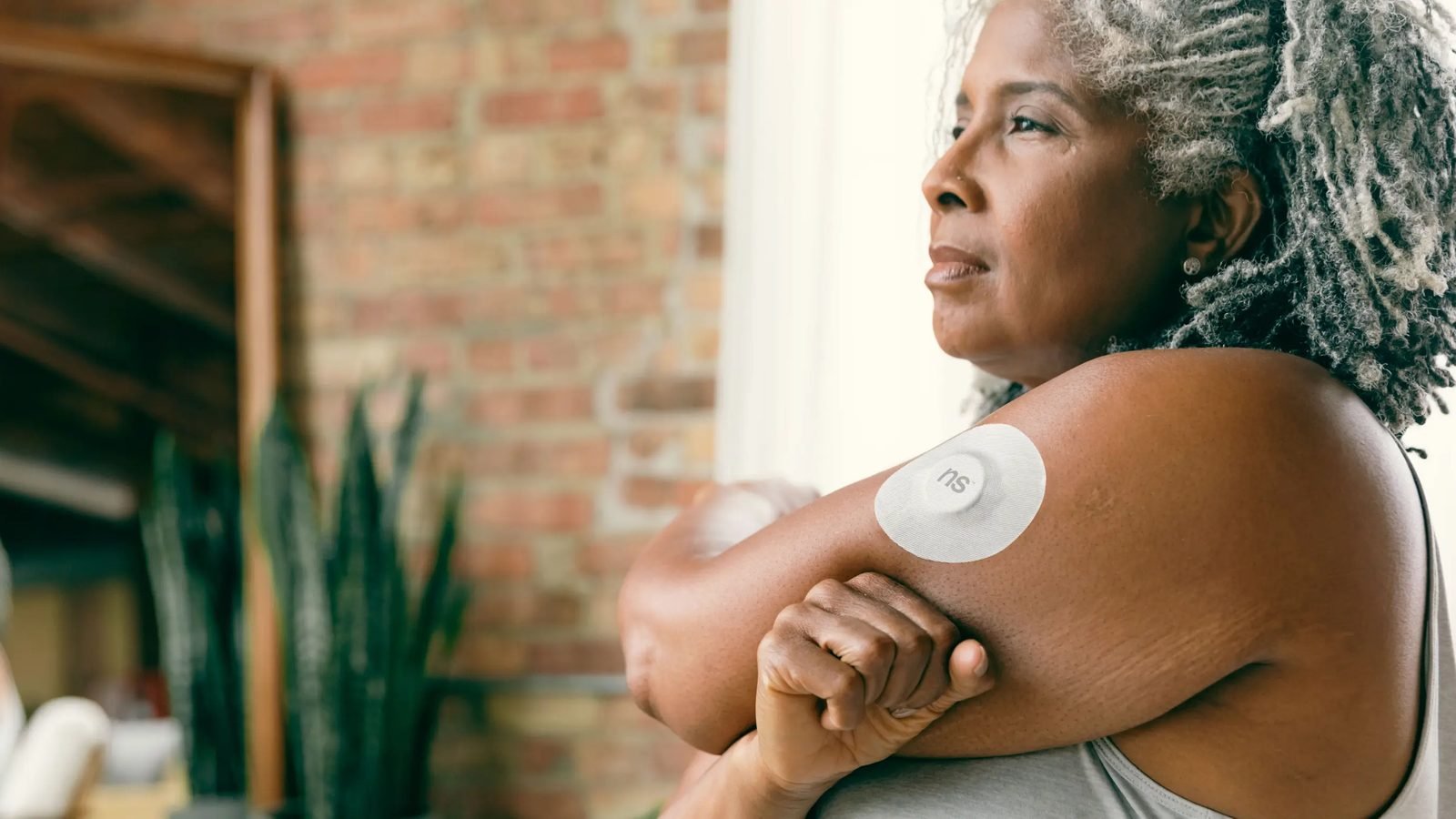
Quick answer: A CGM for weight loss can show how your blood sugar moves after meals, but it can’t tell you how much fat you’re losing. In a study of healthy adults without diabetes, glucose stayed between 70 and 140 mg/dL about 96% of the day, and short rises after meals were normal. If you don’t have diabetes, your weight, waist and a yearly blood test tell you more, for far less than ₹3,500 to ₹5,000 per two-week sensor.
Key takeaways
- Healthy adults without diabetes spend about 30 minutes a day above 140 mg/dL, so post-meal spikes alone aren’t a warning sign.
- A CGM measures glucose, not calories or fat. Weight loss still comes down to eating less than you burn.
- The “GMI” estimate on CGM apps often doesn’t match a lab HbA1c in people without diabetes.
- With World Diabetes Day on 14 November, a lab test or a free risk score is a better first step than a sensor.
In this article, you’ll learn:
- What a CGM actually measures
- What normal glucose looks like in people without diabetes
- Where a CGM for weight loss helps, and where it misleads
- What it costs in India
- Cheaper checks that track fat loss better
What a CGM Measures (and What It Doesn’t)
A continuous glucose monitor, or CGM, is a small sensor that sits on the back of your upper arm. A thin filament under the skin reads glucose in the fluid between your cells and sends the readings to your phone or a reader through the day.
It was built for people with diabetes, especially those on insulin, who need to catch highs and lows. Abbott’s FreeStyle Libre site for India, which sells the Libre and Libre 2 Plus here, pitches it as a way to manage diabetes.
Over the past few years, the CGM for weight loss idea has turned it into a fitness gadget. Influencers and diet apps sell them as a CGM for weight loss tool: wear one, see which foods “spike” you, avoid those foods, lose weight.
Here’s the catch. A CGM measures sugar in your blood. It doesn’t measure calories, fat burned, muscle gained or how full you feel. Two meals with the same glucose curve can have very different calorie counts.
What Normal Glucose Looks Like Without Diabetes
The best reference comes from a 2019 study in the Journal of Clinical Endocrinology & Metabolism. Researchers put blinded CGMs on 153 healthy people aged 7 to 80, all without diabetes and not obese, for up to 10 days.
| Measure | What they found |
|---|---|
| Average glucose (under 60 years) | 98 to 99 mg/dL |
| Average glucose (over 60 years) | 104 mg/dL |
| Time between 70 and 140 mg/dL | 96% (median) |
| Time above 140 mg/dL | 2.1%, about 30 minutes a day |
| Time below 70 mg/dL | 1.1%, about 15 minutes a day |
So healthy people do go above 140 mg/dL, usually after meals, for around half an hour a day. They also dip below 70 now and then. That’s normal physiology, not a disease.
This matters for anyone trying a CGM for weight loss, because many first-time users see a jump after a plate of rice or a few rotis and panic. A short rise that comes back down within a couple of hours is what a working body does.
Where a CGM for Weight Loss Can Help
To be fair, the data can be useful for some people.
- Seeing patterns. You might notice that a sweet chai at 4 pm is followed by a dip and a snack craving an hour later. That’s information you can act on.
- Testing small habits. You can compare your curve on a day you take a 10-minute walk after dinner with a day you don’t. Seeing the difference on a graph is a nudge some people need.
- Prediabetes. If a doctor has told you that you’re at high risk, short-term CGM use under their guidance can help you see how meals affect you.
That last group is big in India. The national ICMR-INDIAB study of over 1 lakh adults found diabetes in 11.4% and prediabetes in 15.3%. Many people in that second group don’t know it yet.
Where It Misleads
A CGM for weight loss has a few blind spots worth knowing before you spend money.
It can push you away from good food. Fruit, dal-chawal and whole grains can all raise glucose for a while. Cutting them out to get a flat line can leave you with a worse diet, not a better one.
Fatty food can look “better” than it is. A fried snack or a creamy dessert can give a slower, flatter curve than plain rice, yet carry far more calories.
The app’s “A1c estimate” isn’t a lab test. Most CGM apps show a GMI, or glucose management indicator. A 2023 study in people without diabetes found GMI and lab HbA1c differed by 0.4 points or more in 71% of participants, and concluded that GMI doesn’t accurately estimate HbA1c in healthy people.
Readings can drift. Sensors read fluid under the skin, not blood, so they lag behind fingerstick readings, and pressure on the sensor while you sleep can cause false lows.
What a CGM Costs in India
Online pharmacies and marketplaces list a single FreeStyle Libre sensor at roughly ₹3,400 to ₹5,000 in 2026, depending on the model, seller and pack size. Each sensor lasts about two weeks.
| Option | Approx. cost | What it tells you |
|---|---|---|
| One CGM sensor | ₹3,400–5,000 per ~2 weeks | Glucose pattern for those 2 weeks |
| Lab HbA1c test | Usually a few hundred rupees | Average blood sugar over ~3 months |
| Fasting glucose test | Usually under ₹200 | One snapshot, good for screening |
| Measuring tape and scale | Under ₹1,500 one time | Waist and weight trend, the real fat-loss signal |
Prices vary by city and lab, so check locally. If you see a “₹1 deal” on a sensor, treat it with suspicion.
Better Ways to Track Fat Loss
If you don’t have diabetes, these work better than a CGM for weight loss, and cost less:
- Weigh yourself weekly at the same time and look at the 4-week trend, not daily swings.
- Measure your waist at the navel once a fortnight. For Indians, belly fat is closely linked to diabetes risk.
- Do the Indian Diabetes Risk Score. It takes two minutes, needs only your age, waist, family history and activity, and we’ve explained it step by step in our diabetes risk score guide.
- Get a yearly HbA1c or fasting glucose test, especially if you’re over 30, overweight or have a parent with diabetes.
This year’s World Diabetes Day, on 14 November, is built around the theme of early action on diabetes. A cheap lab test and a waist measurement are about as early as it gets.
If you like gadgets for health tracking, the same rule applies to other wrist readings too, as we found with smartwatch blood pressure: useful for trends, not a replacement for proper testing.
Frequently Asked Questions About CGM for Weight Loss
Can a CGM help me lose weight if I don’t have diabetes?
It can make you more aware of your eating habits, which helps some people. On its own, it doesn’t cause fat loss. You still need a calorie deficit, enough protein and regular activity.
Is a glucose spike after rice bad for me?
Not by itself. Healthy adults spend about 30 minutes a day above 140 mg/dL, mostly after meals. What matters more is whether glucose comes back down within a couple of hours and what your HbA1c says.
Do I need a prescription to buy a CGM in India?
Rules and seller policies can vary. Either way, it’s worth talking to a doctor first, especially if you have prediabetes or take any medicine that affects blood sugar.
How long should a non-diabetic wear a CGM?
If you do try one, a single two-week sensor is usually enough to see your patterns. Wearing them back to back adds cost without telling you much more.
The Bottom Line
A CGM for weight loss is an interesting window into your blood sugar, but it’s an expensive one, and it’s easy to misread. Short spikes after meals are normal. Fat loss shows up on the scale and the tape, not on a glucose graph. If you want a real health check this World Diabetes Day, start with a lab test and your waist size.
Found this useful? Save it, share it with the friend who just ordered a sensor, and follow our WhatsApp channel for more honest takes on fitness tech.
This article is for general information and isn’t medical advice.