
Quick answer: Treat a smartwatch blood pressure reading as a rough wellness number, not a medical result. Major hypertension guidelines, including the 2025 American Heart Association/ACC guideline and a 2022 European Society of Hypertension statement, say cuffless devices aren’t accurate enough yet to diagnose or manage high blood pressure. Watches that offer BP, like Samsung’s, must be calibrated with a regular arm cuff every 28 days. If you want a number you can act on, use a validated upper-arm cuff monitor.
Key takeaways
- Cuffless BP watches estimate pressure from your pulse signal. They don’t measure it directly the way a cuff does.
- Guidelines from the US and Europe don’t recommend them for diagnosing or treating high BP.
- Samsung’s Blood Pressure app needs an arm-cuff calibration every 28 days and is labelled for general wellness only.
- A normal-looking watch reading should never stop you from getting a proper cuff check, especially if you’re over 30 or have a family history.
In this article, you’ll learn:
- How a smartwatch “measures” blood pressure
- What the hypertension guidelines say about watch readings
- Why calibration matters and where it can go wrong
- How to take a home reading you can trust
- When a watch reading is still useful
How Smartwatch Blood Pressure Works
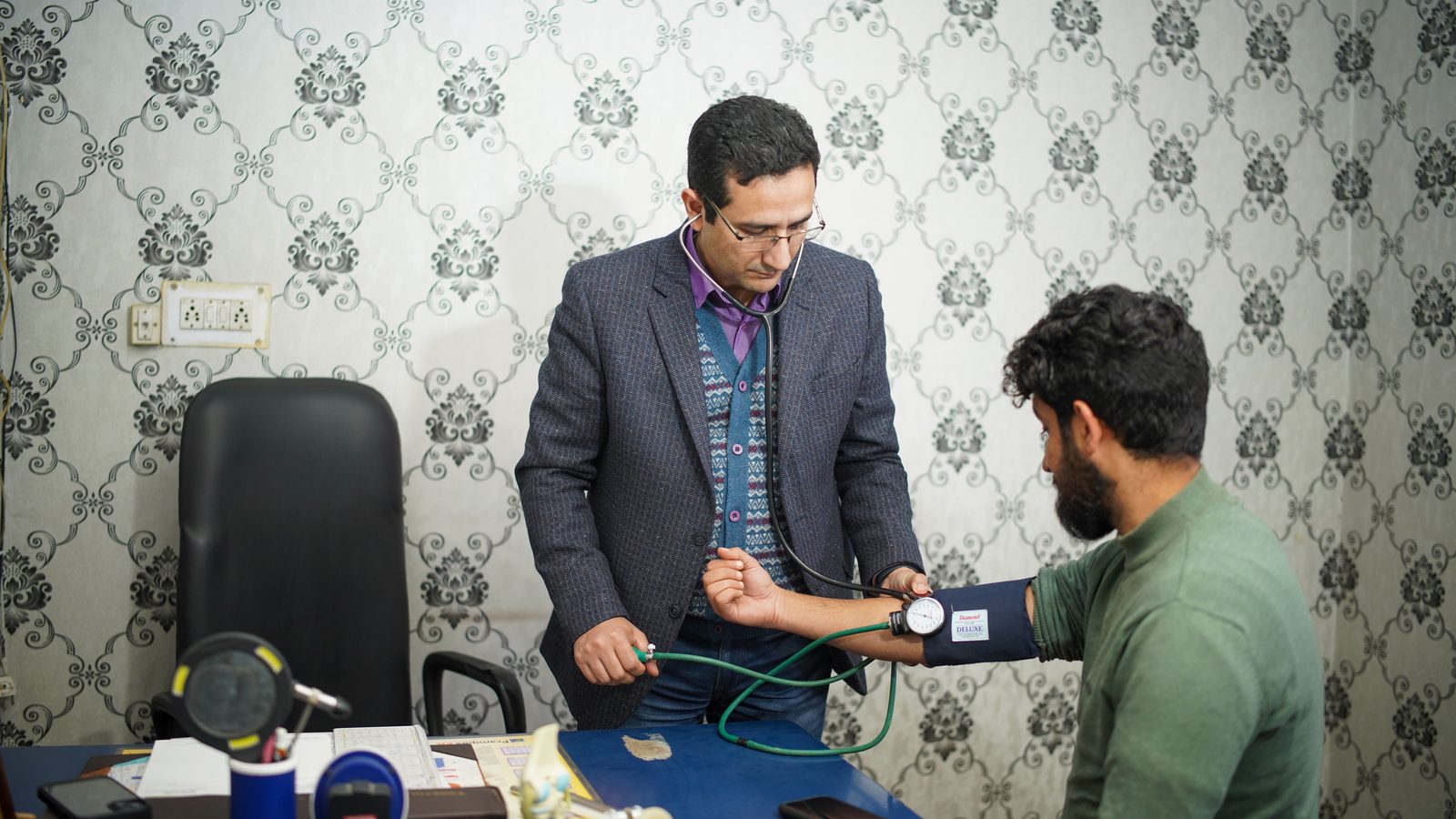
A regular BP monitor squeezes your upper arm with a cuff, then slowly lets the air out while it senses the pressure in your artery. That’s a direct measurement.
A watch can’t squeeze your arm. Instead, its green sensor lights read your pulse wave at the wrist (the same sensor that tracks heart rate). Software then estimates what your blood pressure probably is, based on the shape and timing of that wave. Most watches need a starting point, which is why they ask you to calibrate against a real cuff first.
So a smartwatch blood pressure number is a prediction built on top of your calibration. If your body changes after that, the prediction can drift.
This is a bigger deal in India than people think. The ICMR-INDIAB national study, published in The Lancet Diabetes & Endocrinology in 2023, found high blood pressure in about 35.5% of the 1.1 lakh-plus adults it surveyed. Many people with high BP don’t feel anything at all, so the number matters.
What Guidelines Say About Smartwatch Blood Pressure
Here’s the short version: doctors’ groups aren’t against the idea, but they’re not ready to trust it.
The European Society of Hypertension’s working group reviewed cuffless devices in 2022. Its statement in the Journal of Hypertension says these devices have “considerable potential”, but that basic questions about their accuracy need to be answered before they can be recommended for clinical use. It also points out that the testing methods used for cuff monitors don’t work well for cuffless ones.
The 2025 high blood pressure guideline from the American Heart Association, American College of Cardiology and other US bodies goes further. It says cuffless devices are not recommended for diagnosing or managing high blood pressure. A separate AHA scientific statement on cuffless devices says the same: not for diagnosing, tracking or treating BP at this time.
Why Calibration Can Mislead You
Samsung’s Galaxy Watch is one of the better-known watches that offers a BP feature in India. Its Samsung Health Monitor page for India spells out the rules plainly:
- You must calibrate with an upper-arm cuff monitor, taking 3 readings within 30 minutes.
- You need to recalibrate every 28 days.
- The app shouldn’t be used to diagnose hypertension, and it isn’t meant for people under 22.
- It works only on Galaxy Watch4 and later models.
Think about what that means. The watch’s numbers lean on your calibration readings. If your cuff reading that day was off, or your blood pressure rises over the following weeks, the watch can keep showing a comfortable number that’s anchored to an old baseline.
The guideline groups flagged a related problem: cuffless devices have struggled to track changes in BP during exercise, during sleep and after people start BP medicines. Those are exactly the moments when you’d want an accurate reading.
| Smartwatch (cuffless) | Upper-arm cuff monitor | |
|---|---|---|
| How it reads BP | Estimates from pulse wave at the wrist | Measures pressure directly with a cuff |
| Needs calibration | Yes, with a cuff (every 28 days on Samsung) | No |
| Guideline view | Not recommended for diagnosis or treatment | Recommended for home checks |
| Best use | Spotting trends, nudging you to check | Real numbers to share with your doctor |
| Approx. cost | Comes with the watch | About ₹1,500–₹3,500 for a basic model |
How to Check Blood Pressure at Home Properly
If the watch has got you curious, good. Now get a reading you can actually use.
The NHS guide to blood pressure tests suggests a simple routine for home checks: take a reading, note it, wait a minute, and take another. Doctors usually ask for this twice a day, morning and evening, for several days.
A few habits make home readings far more reliable:
- Use an upper-arm cuff, not a wrist cuff, if you can. Pick one from a known brand and check that the cuff fits your arm.
- Sit quietly for 5 minutes first. No tea, coffee, smoking or exercise in the 30 minutes before.
- Sit with your back supported and feet flat. Rest your arm on a table at roughly heart level.
- Don’t talk during the reading. It sounds small, but it can push the number up.
- Write it down. Date, time, both readings. A photo of the screen works too.
The NHS says blood pressure is usually considered high at 135/85 or above when checked at home, and 140/90 or above when a health professional checks it in a clinic. If your home numbers sit around or above those levels, book a doctor’s visit.
When a Watch Reading Is Still Useful
None of this means you should switch the feature off. Used the right way, it can help.
- It can nudge you. If your watch keeps showing higher numbers than usual, that’s a reason to check with a cuff, not a reason to panic or ignore it.
- It can show patterns. Some people notice readings creep up during stressful weeks or after poor sleep. Treat that as a hint, then confirm with a cuff.
- It keeps health on your mind. Seeing a number on your wrist makes many people more likely to get a real check-up.
What a watch shouldn’t do is reassure you. A normal-looking smartwatch blood pressure reading isn’t proof your BP is fine. The same goes for other wrist numbers. We’ve covered why smartwatch calorie counts often don’t match, and the lesson is similar: watches are good at trends and weaker at exact values.
If you’re already on BP medicine, don’t change your dose based on a watch reading. Talk to your doctor and bring your cuff log.
Frequently Asked Questions About Smartwatch Blood Pressure
Q: Is smartwatch blood pressure accurate?
It can be close for some people some of the time, but it’s not reliable enough for medical decisions. The 2025 US hypertension guideline and the European Society of Hypertension both say cuffless devices shouldn’t be used to diagnose or manage high blood pressure yet.
Q: Why does my Samsung watch need a BP cuff?
The watch estimates blood pressure from your pulse wave and needs real cuff readings as a starting point. Samsung asks you to calibrate with an upper-arm cuff and redo it every 28 days, or the app stops measuring.
Q: Can I use my smartwatch instead of a BP machine?
No. Use the watch for trends and reminders, and use an upper-arm cuff monitor for numbers you track or share with your doctor. A basic cuff monitor costs roughly ₹1,500–₹3,500 in India.
Q: What BP reading at home is considered high?
According to the NHS, 135/85 or higher at home usually counts as high. If your readings are at or above that on several days, see a doctor.
The Bottom Line
Your smartwatch blood pressure feature is a curiosity tool, not a medical device you should lean on. It guesses from your pulse, depends on a cuff to calibrate, and guideline groups on both sides of the Atlantic say it isn’t ready for diagnosis. Keep the feature on if you like it, but put a proper upper-arm cuff on your shopping list and check your numbers the right way.
Save this post, share it with the family member who trusts their watch a little too much, and follow FitnessGear.in on WhatsApp for honest wearable guides.
This article is for general information and isn’t medical advice.