
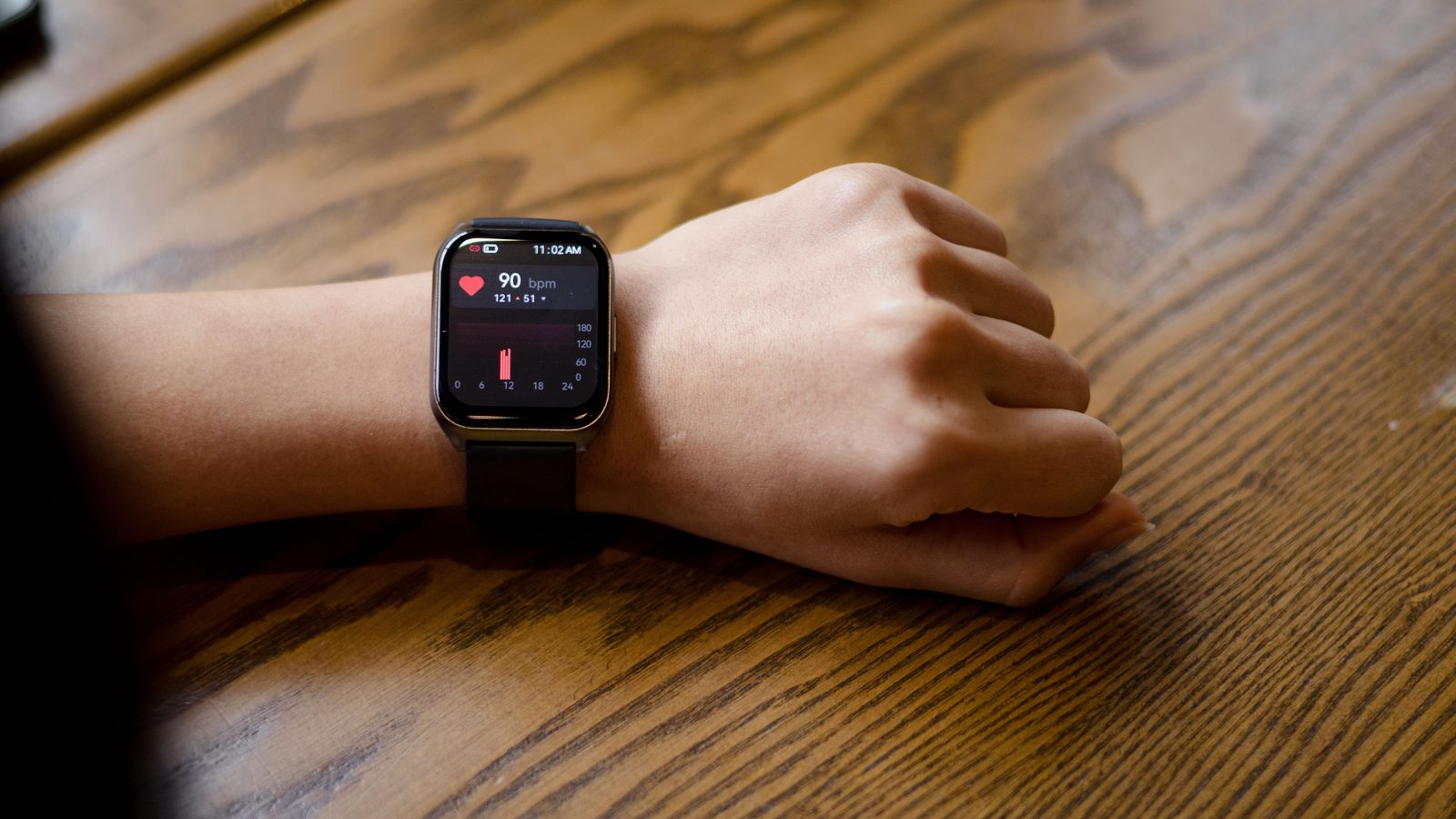
Quick answer: Heart rate zones split your effort into five bands based on a percentage of your maximum heart rate, which most watches estimate as 220 minus your age. Zones 1–2 are easy, zone 3 is moderate (you can talk in short sentences), and zones 4–5 are hard. For fat loss and general fitness, most of your weekly time should sit in zones 2–3, with a little zone 4. The “fat-burn zone” label is misleading: total calories burned and your diet matter far more than which zone you sit in.
Key takeaways
- Zones are percentages of your max heart rate, which is only an estimate (220 − age).
- Zones 2–3 are where beginners should spend most of their exercise time.
- “Fat-burn zone” doesn’t mean you lose more fat overall.
- Wrist sensors can lag or misread during intervals, so trust trends over single readings.
What Are Heart Rate Zones?
Open the workout summary on almost any smartwatch, whether it’s a Noise, boAt, Amazfit, Samsung or Apple, and you’ll see a coloured bar chart: time spent in zone 1, zone 2, and so on. It looks scientific. But what do the zones actually mean, and should you care?
Heart rate zones are just bands of effort. Your watch takes an estimate of your maximum heart rate and splits it into five chunks. Each chunk feels different and trains your body in a slightly different way.
In this article, you’ll learn:
- How your watch calculates your zones
- What each of the five zones feels like
- Which heart rate zones help with fat loss
- When to ignore your watch
- How to set your zones more accurately
How Your Watch Works Out Your Zones
Most watches start with the simplest formula: maximum heart rate ≈ 220 − your age. The British Heart Foundation uses this same estimate when it explains target heart rates.
So for a 35-year-old, the watch assumes a maximum of about 185 beats per minute (bpm). It then divides that into zones.
The catch: it’s an average. Your real maximum could be 10–15 beats higher or lower. That’s why one person feels zone 3 as easy and another feels it as tough.
The 5 Heart Rate Zones, Explained
Different brands use slightly different cut-offs, but this five-zone layout is the common one.
| Zone | % of max HR | Example for age 35 (max ~185) | How it feels |
|---|---|---|---|
| Zone 1 | 50–60% | 93–111 bpm | Very easy, a slow stroll |
| Zone 2 | 60–70% | 111–130 bpm | Easy, you can chat in full sentences |
| Zone 3 | 70–80% | 130–148 bpm | Moderate, short sentences only |
| Zone 4 | 80–90% | 148–167 bpm | Hard, a few words at a time |
| Zone 5 | 90–100% | 167–185 bpm | All-out, can’t talk |
The BHF describes moderate exercise as roughly 50–70% of your maximum heart rate. That lines up with zones 1–2 and the lower end of zone 3 above.
Which Heart Rate Zones Are Best for Fat Loss?
Here’s the honest bit. Many watches label zone 2 as the “fat-burn” zone. During easy exercise, your body does use a higher share of fat for fuel. But a higher share of a small number is still small.
A brisk 40-minute walk in zone 3 burns more total calories than a 40-minute stroll in zone 2. And fat loss over weeks depends on your overall calorie balance, not on which fuel your body used during one session.
A practical weekly mix for fat loss and general fitness:
- Most sessions in zones 2–3. Brisk walks, easy cycling, steady treadmill sessions. You can keep this up for a long time and recover quickly.
- One or two short bursts of zone 4. Hill walks, intervals or a fast skipping set. Only once you’re comfortable with regular exercise.
- Zone 5 rarely, if ever. Beginners don’t need it.
The WHO physical activity guidelines suggest 150–300 minutes of moderate activity a week, or 75–150 minutes of vigorous activity. Zones 2–3 count as moderate for most people.
The Talk Test: A Free Check on Your Watch
You don’t need a watch to know your zone. Try talking.
- Can sing: you’re probably in zone 1.
- Can chat in full sentences: zone 2.
- Can talk in short sentences: zone 3.
- Only a few words: zone 4.
- Can’t talk at all: zone 5.
If your watch says zone 4 but you’re chatting easily, the watch’s estimate of your max heart rate is probably off. Or the sensor is misreading.
When Not to Trust Your Watch’s Heart Rate Zones
Optical sensors on the wrist shine light into your skin to estimate pulse. They work reasonably well during steady exercise, but they struggle in a few situations:
- Intervals and sudden sprints. The reading often lags behind your real heart rate by several seconds.
- Strength training and gripping. Tensing your wrist on a dumbbell can throw off the reading.
- A loose strap. Wear it snug, about a finger’s width above the wrist bone.
- Cold weather. Less blood flow to the skin in winter mornings can make early readings jumpy.
- Tattoos and very hairy wrists. Both can interfere with the sensor.
Chest straps are more accurate for heart rate during intervals, if you want precise zones. For most people, watching the weekly trend is enough. Our test of smartwatch step count accuracy has more on where budget watches slip.
Medication matters too. Some blood pressure medicines, such as beta blockers, keep heart rate lower. If you take one, the standard zones won’t fit you. Ask your doctor what effort level is safe.
How to Set More Accurate Heart Rate Zones
You can usually edit zones in your watch’s app. Two simple options:
- Enter your real age and resting heart rate. Some apps then use the “heart rate reserve” method, which accounts for fitness level and is usually closer than plain 220 − age.
- Let the watch auto-detect. Several brands update your max heart rate after you’ve done a few hard workouts. Wear it for a couple of weeks of regular exercise first.
Avoid trying to “find” your max heart rate with an all-out sprint if you’re new to exercise, have heart problems, or are over 40 and haven’t had a check-up.
Frequently Asked Questions About Heart Rate Zones
Q: What is a good heart rate zone for walking?
For a brisk walk aimed at fitness and fat loss, zones 2–3 are a good target. You should feel warm, breathe faster and still talk in sentences.
Q: Is zone 2 training really the best for fat loss?
Zone 2 uses a higher share of fat for fuel, but fat loss depends on total calories over time. Mixing zones 2–3 with a little zone 4 works well for most people.
Q: Why does my watch show zone 4 when I’m walking?
Your max heart rate estimate may be too low, the strap may be loose, or the sensor may be reading your cadence instead of your pulse. Do the talk test to cross-check.
Q: Is it dangerous to stay in zone 5?
Short bursts are fine for trained, healthy people. Beginners and anyone with heart issues should avoid it and get medical advice first. Stop if you feel chest pain or dizziness.
The Bottom Line
Heart rate zones turn your watch’s pulse reading into five simple effort levels. Spend most of your week in zones 2–3, add a little zone 4 once you’re fit enough, and don’t chase the “fat-burn” label. Use the talk test to check whether your zones make sense, and trust weekly trends over single numbers.
Save this guide for your next workout, share it with a friend who keeps asking what zone 3 means, and follow FitnessGear.in on WhatsApp for more honest smartwatch guides.
This article is for general information and isn’t medical advice.