
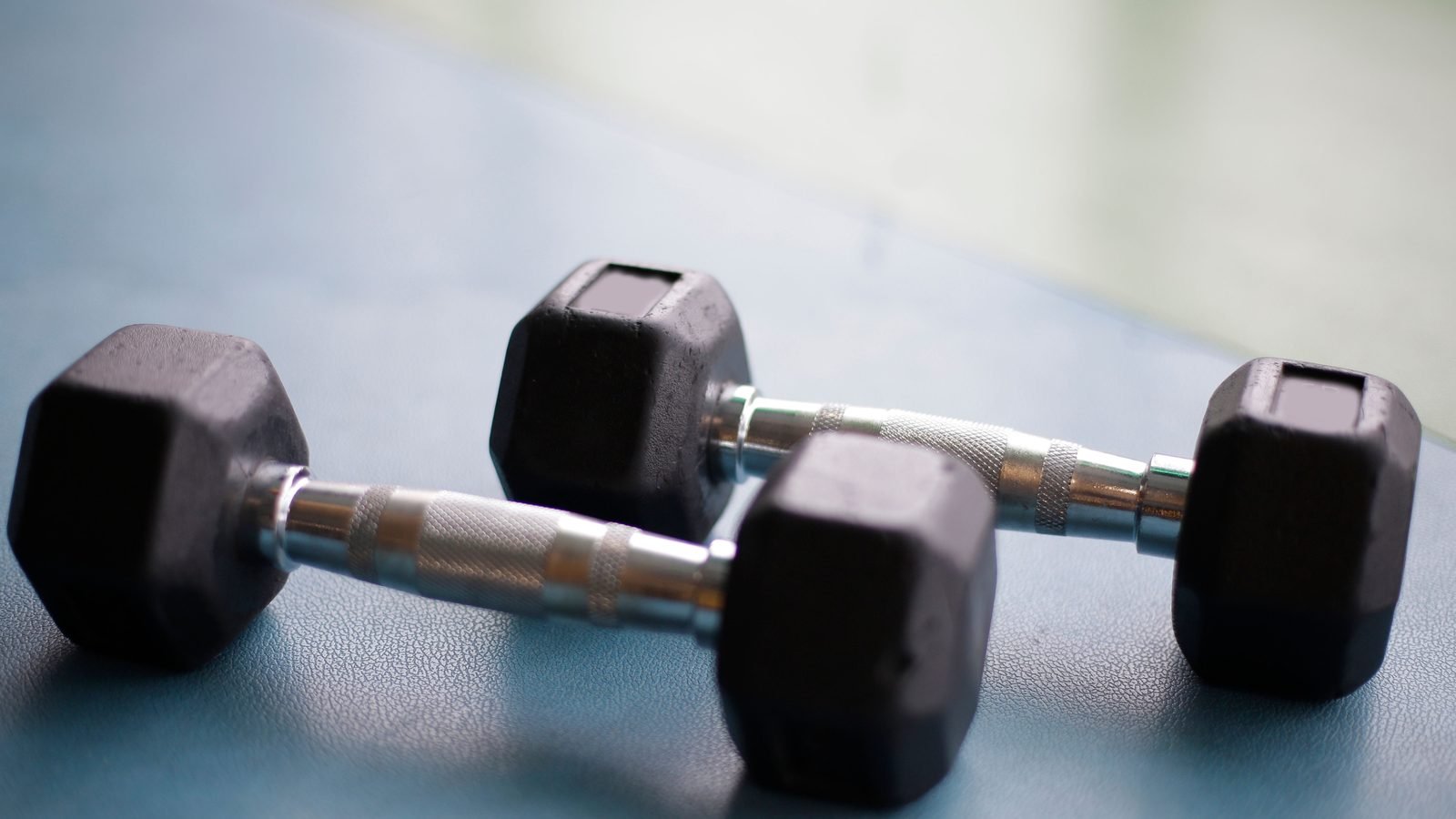
Quick answer: For most Indian flats, rubber-coated hex dumbbells are the better buy. Their flat sides stop them rolling across tiles, they’re quieter when you set them down, and you can lean on them for push-ups and rows. Round dumbbells still make sense in one case: an adjustable spinlock set with round plates, if you need many weights in very little space and can keep it on a mat or rack.
Key takeaways
- Hex dumbbells don’t roll. On smooth tiled floors, that’s the biggest safety difference.
- Rubber coating is kinder to floors and quieter for the family downstairs than bare iron or chrome.
- Fixed hex pairs are simple but take more room as you add weights.
- Adjustable sets with round plates save space, but they roll and the collars need checking every session.
In this article, you’ll learn:
- What actually differs between hex vs round dumbbells
- Why rolling matters so much in a flat
- Noise, floor damage and space compared
- Who should still pick round plates
- What to check before you pay
Hex vs Round Dumbbells: What’s the Real Difference?
The name refers to the shape of the weight heads at each end of the handle.
Hex dumbbells have six flat sides. Most sold in India are cast iron with a rubber coating, and they’re usually fixed weight: a 5 kg dumbbell is always 5 kg.
Round dumbbells come in a few kinds:
- Fixed round dumbbells, in chrome, rubber, or vinyl or PVC for light weights
- Adjustable spinlock dumbbells, a threaded bar with round plates and screw-on collars
- Studio or pro-style round dumbbells, the polished ones you see on gym racks
For a beginner at home, the real choice is usually between a fixed hex pair and an adjustable round-plate set. We’ve compared those two formats in depth in our adjustable dumbbells guide. Here we focus on shape and what it means in a small home.
The Rolling Problem in Small Homes
This is the deciding point for most flats. Put a round dumbbell down on vitrified tiles or marble and it can roll. It’s a small thing until it hits a glass door, a child’s foot or the edge of a sofa leg.
Hex dumbbells stay where you put them. That matters more than it sounds:
- Safer between sets. You can drop to the floor for the next move without watching your weights.
- Better for floor moves. Push-ups on dumbbell handles and renegade rows need a base that doesn’t wobble. Hex heads sit flat; round ones don’t.
- Easier storage. A pair of hex dumbbells sits quietly in a corner or under a bed. Round ones need a rack, a box or a mat with a lip.
If you train in a living room that doubles as a play area, that alone settles hex vs round dumbbells for most people.
Hex vs Round Dumbbells: Noise, Floors and Neighbours
In an apartment, every weight you set down is heard by someone.
| Factor | Rubber hex | Chrome or bare iron round | Spinlock round plates |
|---|---|---|---|
| Rolls on tiles | No | Yes | Yes |
| Noise when set down | Lower | Loud, metallic | Loud, plates can rattle |
| Floor scratches | Less likely | Likely | Likely |
| Good for push-up handles | Yes | No | No |
| Space needed for many weights | More | More | Least |
| Change weight mid-workout | No | No | Yes, but slow |
Rubber isn’t silent, so a thick mat still helps. Our post on home gym flooring for flats covers mats and interlocking tiles that absorb most of the thud.
One more point: some rubber-coated dumbbells have a noticeable smell when new. If you keep them in a bedroom, airing them out on the balcony for a few days can help.
Space and Cost: Hex vs Round Dumbbells
Here’s where round plates fight back. A single pair of spinlock handles plus a stack of plates can cover many weights in the space of a shoebox. To match that with fixed hex dumbbells you’d need several pairs, and those take up floor space and cost more in total.
For most beginners, though, you don’t need many weights. Two pairs, a lighter one for shoulders and arms and a heavier one for squats, lunges and rows, cover a full-body plan for months. Our 5 kg vs 10 kg dumbbell guide helps you pick the weights.
On price, check the live listing before you buy. As one example, Decathlon’s 10 kg Corength hexagonal dumbbell was listed at ₹3,999 (MRP ₹5,999) on decathlon.in on 21 November 2026. The product name refers to a single dumbbell, so confirm whether a listing is for one or a pair before comparing prices. Doing a quick ₹-per-kg sum across listings makes comparisons much fairer.
When Round Dumbbells Still Make Sense
Round isn’t wrong. It just suits a different kind of buyer.
Pick round (usually an adjustable spinlock set) if:
- You have very little storage and want a wide range of weights
- You plan to progress steadily and don’t want to keep buying new pairs
- You’re happy training on a mat, with a box or rack to park the weights
- You don’t mind spending a minute changing plates
Pick hex if:
- You train on smooth tiles or marble
- There are children or pets around
- You want push-ups on handles, renegade rows or other floor moves
- You like grabbing a weight and starting, with no assembly
With spinlocks, check the collars every session. They can loosen during a set, and a plate sliding off is the most common way these sets cause trouble.
What to Check Before You Buy Hex vs Round Dumbbells
Whichever shape you choose, these checks help:
- Handle grip. Knurled steel or a textured grip is less likely to slip with sweaty hands.
- Handle width. It should fit your palm comfortably with a little room on either side.
- Coating quality. Look for even rubber with no cracks around the handle joint.
- Weight labels. Clear, moulded numbers save time and mistakes.
- Single or pair. Listings vary. Read the description, not just the photo.
- Return policy. Heavy items are a pain to return, so know the terms first.
How much to lift and how often is a separate question. The WHO advises adults to do muscle-strengthening activity on two or more days a week. The NHS strength exercises page has simple moves you can do with one pair. If you’re still weighing up a different tool, our kettlebell vs dumbbell comparison covers that choice.
Frequently Asked Questions About Hex vs Round Dumbbells
Q: Are hex dumbbells better than round ones for beginners?
For most beginners training at home, yes. They don’t roll, they’re easy to store, and you can use them for floor moves. Round plates suit people who want lots of weights in a small space.
Q: Do hex dumbbells damage tiles?
Rubber-coated ones are much less likely to chip tiles than bare iron or chrome, but a dropped weight can still crack a tile. Train on a mat and lower weights, don’t drop them.
Q: Is it safe to use dumbbells in an upper-floor flat?
Yes, with normal weights and care. Lower them gently, use a mat, and avoid dropping heavy weights from height. Noise is usually the bigger issue than the floor itself.
Q: Can I mix hex and round dumbbells?
Of course. Many people start with a light fixed hex pair and later add an adjustable set for heavier lifts. Just store the round ones where they can’t roll.
Our Pick for a Flat
In the hex vs round dumbbells question, hex wins for most Indian flats: they stay put on tiles, are kinder to floors and neighbours, and work for floor moves. Choose an adjustable round-plate set only if space and a wide weight range matter more than convenience.
Save this before you add dumbbells to your cart, share it with a friend setting up a home gym, and follow our WhatsApp channel for more home gym guides.
1 thought on “Hex vs Round Dumbbells: Which to Buy for a Flat”
Comments are closed.