
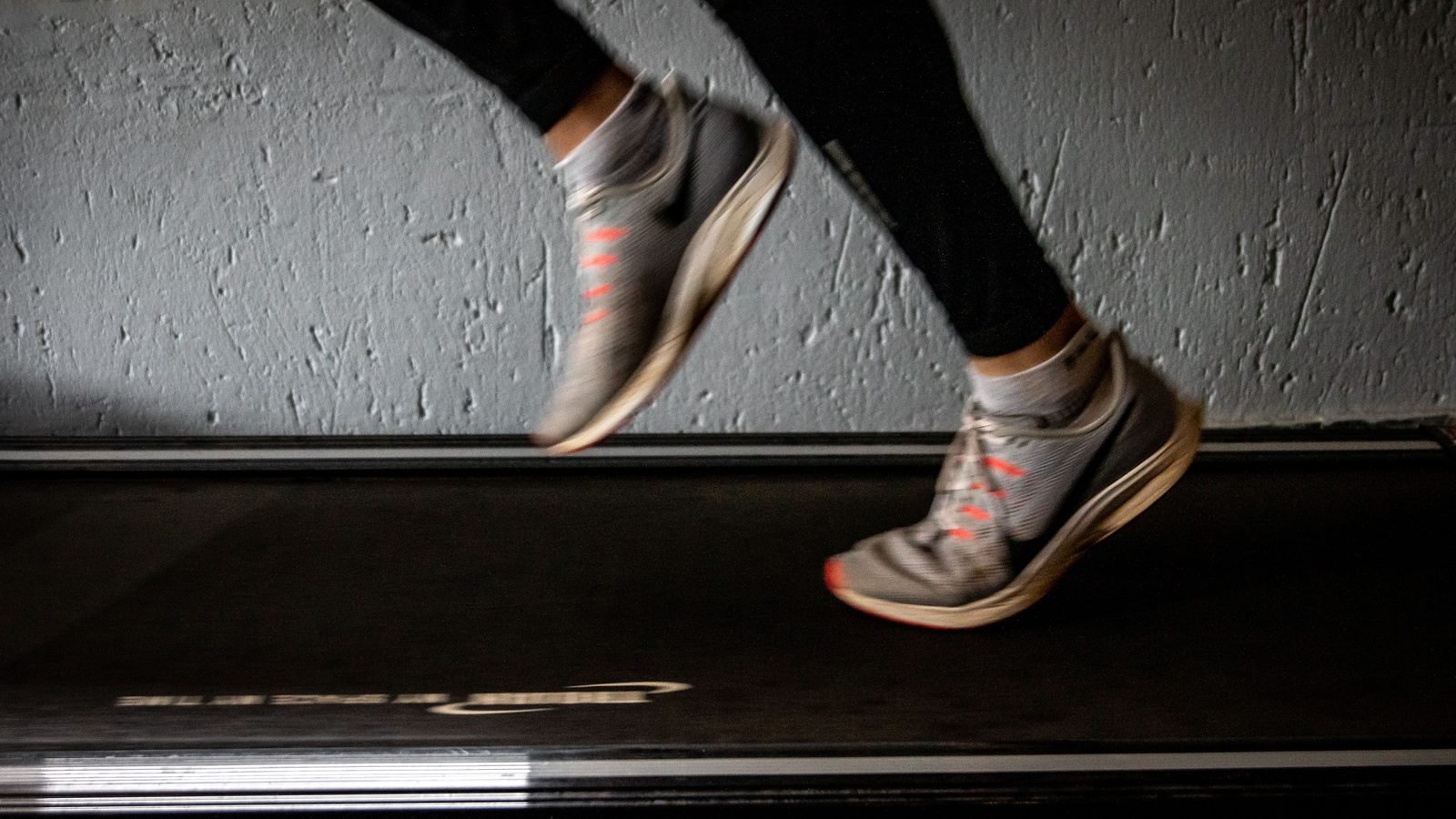
Quick answer: A treadmill belt slipping right after oiling is usually one of two things: too much silicone has spread where it shouldn’t, or the belt was already a little loose and the fresh oil made it obvious. Wipe off any excess, walk slowly for a few minutes so the oil spreads, then test again. If it still slips under your weight, tighten both rear roller bolts by the same quarter turn, following your manual. If the motor hums but the belt jerks or stalls, stop and call the service centre.
Key takeaways
- Extra oil usually settles down after a few minutes of slow walking. Wipe any that has leaked onto the floor or belt edges first.
- Tension is set at the two rear roller bolts. Turn both by the same small amount, test with your full weight, and repeat only if needed.
- Over-tightening isn’t a cure. It wears the belt, rollers and bearings faster.
- A slipping drive belt inside the motor cover is a job for a technician, not a home fix.
In this article, you’ll learn:
- Why a treadmill belt slipping often shows up right after oiling
- How to tell oil trouble from a loose belt in two minutes
- The quarter-turn tension fix, step by step
- What over-tightening does
- When the problem is inside the motor cover
Why a Treadmill Belt Slipping Shows Up After Oiling
You followed the routine: lifted the belt, squeezed silicone under it, switched the machine on. Now the belt hesitates every time your foot lands. It’s a common complaint, and it doesn’t usually mean you broke anything.
Here’s what tends to happen. Silicone is meant to reduce friction between the belt and the deck. That’s the whole point. But the drive system relies on some grip between the belt and the rollers to pull it along. If a belt was already slightly loose, the old, dry deck was adding drag that hid the problem. Fresh oil removes that drag, and a belt that was just about holding on now slips.
The other common cause is simply too much oil. When a lot of silicone goes in at once, some can work its way onto the belt edges or near the rollers before it spreads out. Our treadmill belt lubrication guide covers how much to use and how often. If you went heavy this time, that’s the first thing to rule out.
A third, less common cause is wear. An old belt or deck, or a drive belt inside the motor cover that’s stretched, can slip no matter what you do with oil.
Quick Check: Oil Problem, Tension Problem or Something Else?
Unplug the machine and take a look before you reach for a wrench. This table matches what you see and feel to the likely cause.
| What you notice | Likely cause | What to do first |
|---|---|---|
| Silicone on the floor, belt edges or side rails | Too much oil | Wipe it off, walk slowly 5 minutes, retest |
| Belt stutters under each footstep at low speed | Belt tension a bit loose | Equal quarter turns on both rear bolts |
| Belt drifts to one side and rubs the frame | Belt off-centre | Centre it with one rear bolt, per your manual |
| Motor revs or hums, belt stalls or jerks | Drive belt or motor issue | Stop using it, call service |
| Slipping started months before you oiled | Worn belt, deck or drive belt | Service visit, check warranty first |
If the floor is slick, deal with that first. A puddle of silicone under the machine is a slipping hazard for you, not just the belt.
Step 1: Clear the Excess Oil
Most cases end here, so don’t skip it.
- Unplug the treadmill at the wall.
- Wipe the floor under and around the deck with a dry cloth.
- Lift the belt edges and wipe any silicone off the side rails and the outer strip of the belt.
- Don’t add more oil. More silicone won’t fix a treadmill belt slipping; it usually makes it worse.
- Plug in, set a slow walking speed of about 3 to 5 km/h, and walk for 5 minutes. This spreads the oil across the deck instead of letting it pool.
Then test properly. Walk at your normal pace for a minute, with your full weight on the belt and your hands off the rails. If the stutter has gone, you’re done. If it’s still there, move to tension.
Step 2: Fix a Treadmill Belt Slipping With Tension
Most home treadmills have two tension bolts at the back of the deck, one on each side of the rear roller. You’ll usually need the Allen key that came in the box.
Sole’s own owner guide on adjusting a treadmill belt gives a simple method that matches what most manuals say:
- Unplug the treadmill.
- Turn both rear bolts clockwise by one quarter turn. Turn them by exactly the same amount, so the roller stays square.
- Plug back in, run the belt at a slow walking speed, and walk on it with your full weight for 30 to 60 seconds.
- Still slipping? Repeat with another equal quarter turn. Stop as soon as the slipping stops.
The key words are “equal” and “small”. Turning one side more than the other pulls the belt off-centre, and big turns overshoot.
Is there a quick way to judge tension? One widely used rule of thumb, from Garage Gym Reviews, is to lift the belt at the middle of the deck: it should rise about 3 to 4 inches (roughly 7.5 to 10 cm). Treat that as a rough guide only. Your model’s manual is the final word, and the footstep test under your own weight matters more than any measurement.
Don’t Over-Tighten
It’s tempting to crank the bolts until the belt feels drum-tight. Don’t. Sole’s guide warns that too much tension can damage the belt and lead to early bearing failure. Extra tension also makes the motor work harder on every stride.
Signs you’ve gone too far:
- The belt feels stiff and the motor sounds strained at low speed
- A new squeak or grinding from the rollers
- A hot or burning smell after a short walk
If you notice any of these, back both bolts off by the same small amount and test again. The goal is the least tension that stops the slip, not the most you can manage.
Centring the Belt After You Tighten
Tightening sometimes nudges the belt to one side. Run it at a slow speed with nobody on it and watch for a minute or two.
Manuals don’t agree on which bolt to turn. Sole’s guide adjusts only the left rear bolt in quarter turns while the belt runs. Other brands tell you to turn the bolt on the side the belt has drifted towards. Both work on their own machines, which is exactly why you should follow your model’s manual here. Whatever the method, make one small turn, then let the belt run for a minute before judging it.
Also check the treadmill is standing level. A machine on a sloping floor, or with one foot on the edge of a mat, can pull the belt to one side every session. If you’re still choosing a base, our post on home gym flooring for flats covers mats that stay flat.
When a Treadmill Belt Slipping Needs a Technician
Some slipping isn’t the running belt at all. Inside the motor cover at the front, a smaller drive belt links the motor to the front roller. If that belt is loose or worn, the roller speeds up and slows down unevenly, and the running belt jerks even when its own tension is fine. Sole’s guide says the drive belt needs a trained technician, not owner adjustment.
Call the service centre if:
- The motor revs but the belt stalls or jerks
- You’ve made two or three equal quarter turns and the treadmill belt slipping hasn’t changed
- You can see fraying, cracks or a shiny worn patch on the belt
- The deck surface looks rough or worn through
- You smell burning or hear grinding
Before opening any cover yourself, read your warranty terms. Many brands want service work done by their own technicians while the machine is covered.
A Simple Maintenance Habit That Prevents This
Most treadmill belt slipping after oiling comes down to doing a big job rarely. A small, regular routine avoids it:
| How often | What to do |
|---|---|
| Every session | Glance at belt position, wipe sweat off rails |
| Monthly | Vacuum under and around the deck, check the machine is level |
| As your manual says (often every few months) | Apply a small amount of 100% silicone |
| After oiling | Walk slowly 5 minutes, then do the footstep test |
| Yearly | Service check if you use it daily |
If you’re still deciding on a machine, belt size and easy access to the rear bolts are worth checking in the showroom. Our treadmill buying guide for India lists the other checks.
Frequently Asked Questions About Treadmill Belt Slipping
Q: Will the slipping go away on its own after oiling?
Sometimes. If you used a bit too much silicone, walking slowly for a few minutes often spreads it out and the slip stops. If it’s still there after that and a clean-up, the belt likely needs a small tension adjustment.
Q: Can I wash the extra silicone off with soap and water?
It’s better not to. Water on an electrical machine isn’t a good idea, and soap can leave residue. Unplug and wipe with a dry cloth instead, then let walking spread what’s left.
Q: Is a treadmill belt slipping dangerous?
It can be. A belt that stops for a split second under your foot can make you stumble, especially at running speed. Slow down or stop using the treadmill until it’s fixed.
Q: How do I know whether I tightened it too much?
If the belt feels stiff, the motor sounds strained, or you hear new squeaks, it’s probably too tight. Loosen both bolts by the same small amount and test again.
Fix It in 15 Minutes, Then Keep It Simple
A treadmill belt slipping after oiling sounds alarming, but most of the time it’s excess silicone or a belt that needed a small tweak anyway. Wipe, walk, test, then make equal quarter turns only if you need them. If the motor side is the problem, let the service team handle it.
Save this checklist for the next time you oil your treadmill, share it with anyone in your society who has one, and follow our WhatsApp channel for more home gym fixes.