
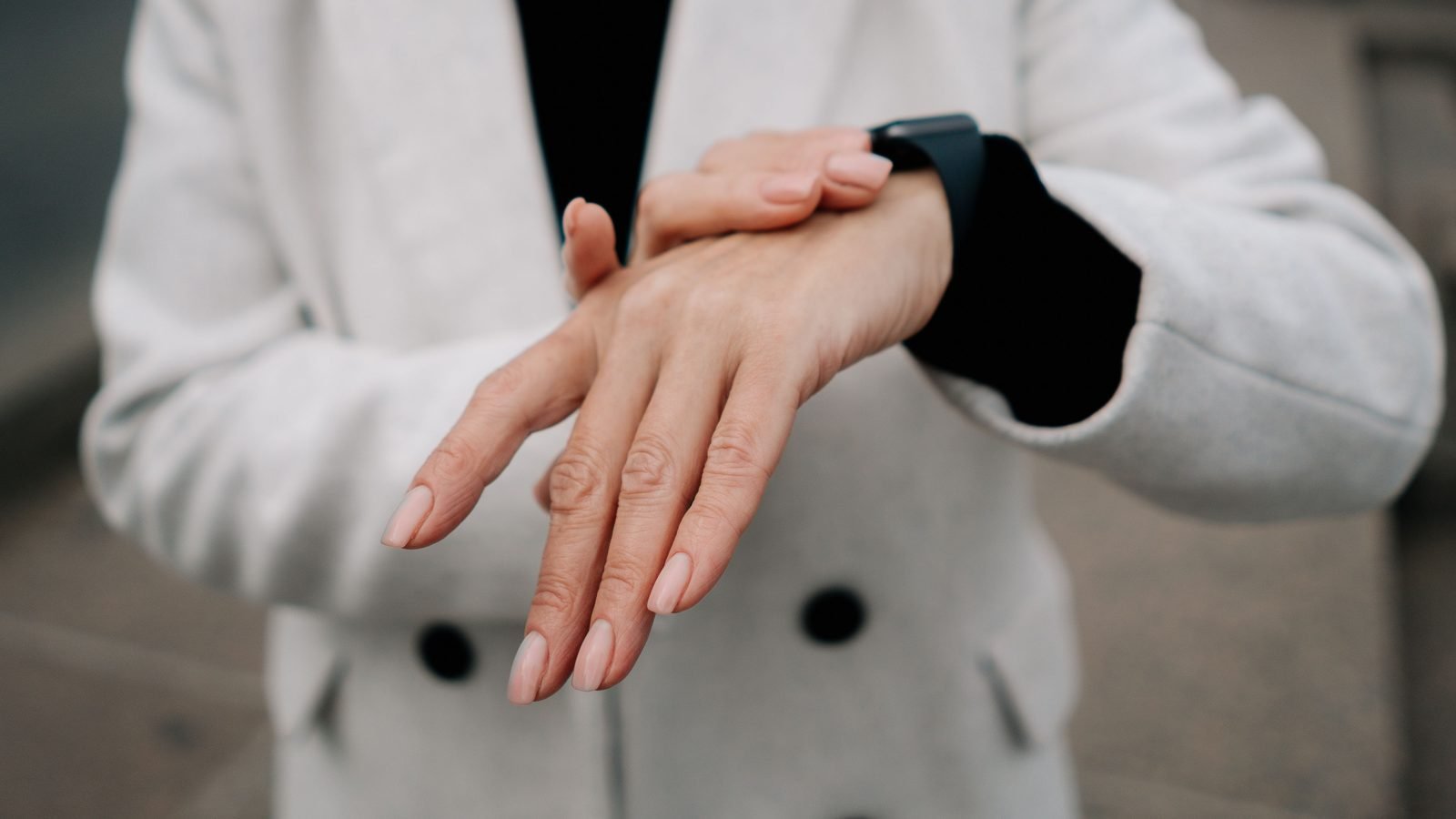
Quick answer: A low or failed smartwatch SpO2 reading on a cold morning is often a sensor problem, not a lung problem. Cold narrows the blood vessels in your skin, so the watch gets a weaker signal. Warm your hands, sit still for a few minutes, tighten the strap a notch and measure again. If the number stays below about 95% and you also feel breathless, have chest pain or blue lips, don’t wait for the watch. Get checked.
Key takeaways
- Apple says low temperatures can cut blood flow in the wrist so much that the sensor can’t get a reading.
- The US FDA lists skin temperature, poor circulation and skin pigmentation among the things that affect oximeter accuracy.
- Most healthy people sit between 95% and 100%, according to both the FDA and Apple.
- Watch SpO2 is a wellness feature. Symptoms matter more than any single number on your wrist.
In this article, you’ll learn:
- Why smartwatch SpO2 readings go wrong when it’s cold
- What a normal reading looks like
- A 6-step recheck you can do in 5 minutes
- How a watch compares with a finger oximeter
- When a low number really needs a doctor
Why Smartwatch SpO2 Drops on Cold Mornings
Winter is here across north India. You step out for a 6 am walk, glance at your watch, and the smartwatch SpO2 figure says 90%. Or it just says “unsuccessful”. It’s easy to panic.
Here’s what’s usually going on. A watch measures blood oxygen by shining red and infrared light into the skin on your wrist and reading what bounces back. It needs a decent flow of blood under the sensor to do that.
Cold does the opposite. Your body narrows the small blood vessels in your skin to keep heat in your core. Less blood under the sensor means a weaker, noisier signal.
Apple says this plainly in its Blood Oxygen support page: skin perfusion, or blood flow through the skin, varies from person to person, and in low temperatures the perfusion in your wrist might be too low for the sensor to get a reading. The US FDA’s consumer guide to pulse oximeters lists skin temperature and poor circulation among the factors that can affect readings, even on medical finger devices. The US National Library of Medicine’s MedlinePlus page on pulse oximetry names cold skin, poor circulation and darker skin pigmentation too.
So a cold wrist can give you a failed reading, or a number that bounces around. Neither one tells you much about your lungs.
What a Normal Smartwatch SpO2 Reading Looks Like
The FDA says oxygen saturation is between 95% and 100% for most healthy people. Apple gives the same range, and adds that some healthy people sit a little below 95%, and that readings are often slightly lower during sleep.
Two more things worth knowing:
- Altitude lowers it. The FDA notes levels are generally slightly lower at higher altitudes. If you’re on a winter trip to Shimla or Manali, a slightly lower reading is expected.
- Some heart and lung conditions lower it too. If you have asthma, COPD or a heart condition, your doctor may give you a different target.
| Reading | What it usually means | What to do |
|---|---|---|
| 95% to 100% | Normal for most healthy adults | Nothing |
| A little under 95%, you feel fine | Could be cold, movement or a loose strap | Do the 6-step recheck below |
| Repeatedly low after a proper recheck | Needs attention | Check with a finger oximeter, call your doctor |
| Any low number plus breathlessness, chest pain or blue lips | Possible emergency | Seek care now, don’t keep testing |
Other Things That Throw Off Your Smartwatch SpO2
Cold is the big one in November, but it’s rarely alone.
- Movement. Apple says motion can stop the watch from getting a reading. Measuring mid-walk rarely works.
- A loose strap. The back of the watch has to touch your skin. A loose band lets light leak in.
- Tattoos. Apple notes some tattoo inks and patterns block the sensor’s light.
- Skin tone. The FDA says current evidence shows accuracy differences between people with lighter and darker skin. That’s worth knowing in India, where most of us have medium to darker skin.
- Wrist position. A wrist bent upward or resting on a cold table can change the signal.
If you’ve been getting rashes from keeping the strap tight, our guide on smartwatch strap rash has fixes, so you don’t have to choose between comfort and a good reading.
The 6-Step Recheck (5 Minutes)
Before you worry about a low smartwatch SpO2 number, do this once, properly:
- Go indoors and warm up. Rub your hands together or hold a warm cup of tea for a couple of minutes.
- Sit down and rest for about 5 minutes. Don’t measure right after climbing stairs.
- Move the watch a finger’s width above the wrist bone and tighten the strap one notch. Snug, not painful.
- Rest your arm on a table or your lap, screen up, wrist flat.
- Stay still and quiet for the whole reading. No talking, no scrolling.
- Take two or three readings a minute apart and look at the pattern, not the single worst number.
The FDA gives similar advice for finger oximeters: keep your hand warm, relaxed and below heart level, sit still, and wait until the number stops changing.
Smartwatch vs Finger Oximeter: Which to Trust?
| Smartwatch | Finger pulse oximeter | |
|---|---|---|
| Where it measures | Wrist | Fingertip |
| Medical status | Usually a wellness feature | Some are cleared medical devices, many aren’t |
| Affected by cold | Yes | Yes |
| Best use | Spotting trends, overnight patterns | A quick spot check when you feel unwell |
Neither is perfect. The FDA says general wellness and sports oximeters aren’t reviewed by the agency before sale and aren’t meant for clinical decisions. Apple says its Blood Oxygen feature isn’t intended for medical use.
So if your watch shows something odd and you feel fine, a finger oximeter can be a second opinion. If you feel unwell, skip both and call a doctor.
When a Low Reading Really Matters
Don’t let a gadget talk you out of real symptoms, or into them. The FDA lists these warning signs of low oxygen:
- Bluish lips, face or nails
- Shortness of breath or a cough that’s getting worse
- Restlessness
- Chest pain or tightness
- A fast pulse
It also warns that some people with low oxygen show few or no symptoms. That’s why a reading that stays low after a careful recheck deserves a call to your doctor, even if you feel okay. And if you already have a heart or lung condition, ask your doctor which number should prompt a call.
Winter adds its own layer. Smog and fog days in north India can make breathing harder for people with asthma. Our post on walking in fog covers when to move your workout indoors.
Frequently Asked Questions About Smartwatch SpO2
Q: Why does my smartwatch SpO2 fail to read in the morning?
Cold, movement and a loose strap are the usual reasons. Apple says low temperatures can reduce wrist blood flow so much that the sensor can’t get a reading. Warm up, sit still and try again.
Q: Is 93% on my watch dangerous?
One reading doesn’t tell you much. Do a proper recheck. If it stays low, or you have symptoms like breathlessness or chest pain, contact a doctor.
Q: Is a smartwatch SpO2 reading accurate for Indian skin?
The FDA says evidence shows accuracy differences between lighter and darker skin for oximeters. Treat watch readings as a rough guide and watch the trend.
Q: Should I buy a watch just for SpO2?
Not for medical reasons. If you need to monitor oxygen for a health condition, ask your doctor which device to use.
Read the Number, Then Read Your Body
A low smartwatch SpO2 on a cold morning is usually a cold wrist, not a crisis. Warm up, sit still, snug the strap and measure again. If it stays low, or you feel unwell, that’s the time to call a doctor.
Save this post for the next foggy morning, share it with the family member who checks their watch ten times a day, and follow our WhatsApp channel for more plain-English wearable guides.
This article is for general information and isn’t medical advice.