
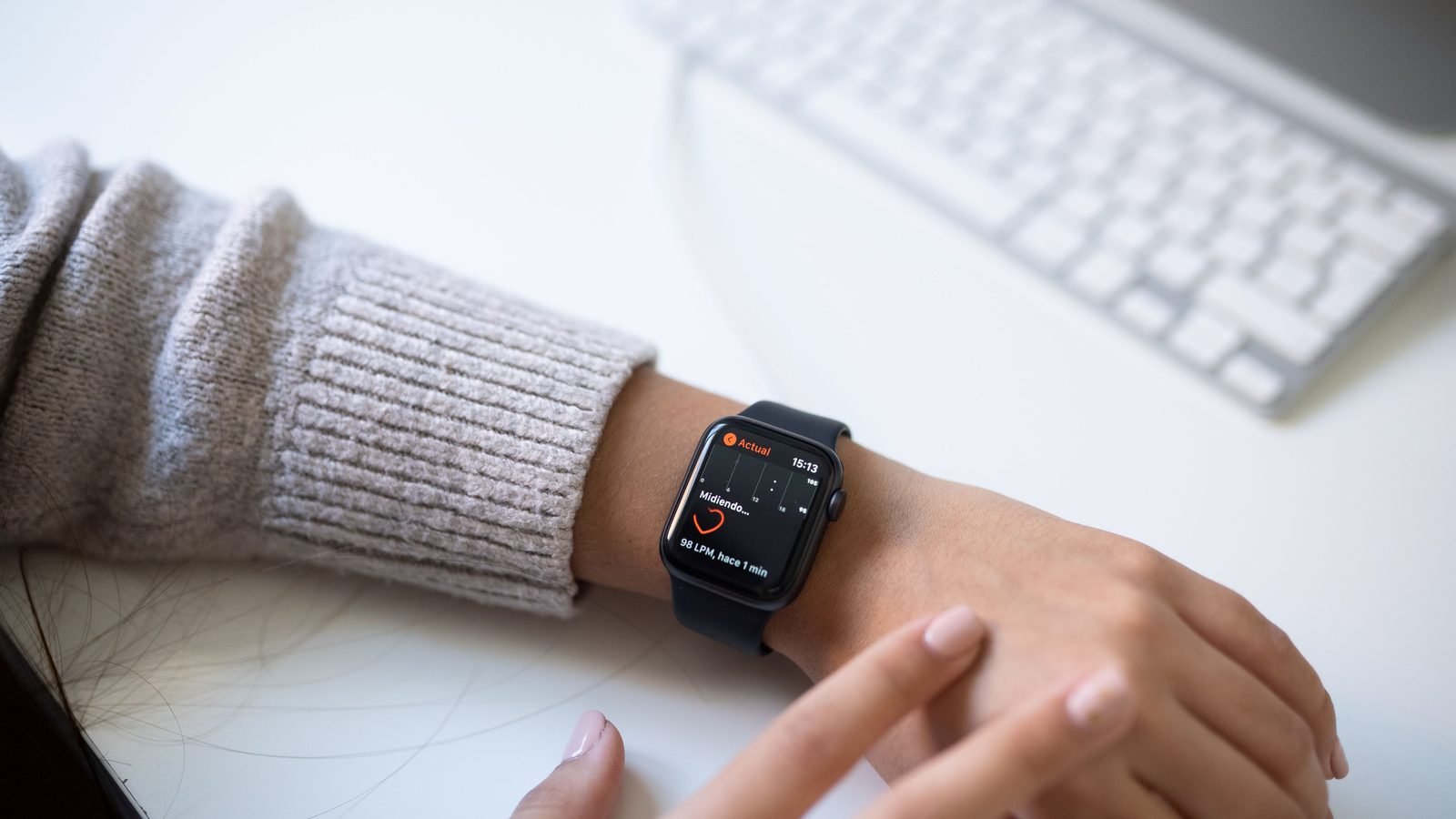
Quick answer: Smartwatch skin temperature is a nightly change from your own baseline, measured at the wrist while you sleep. It isn’t your body temperature and it isn’t a fever reading. A rise of a fraction of a degree is often down to a heavy razai, a heater, alcohol, a late meal, a hard workout or your menstrual cycle. Treat it as a nudge to notice how you feel, and use a proper digital thermometer if you think you’re unwell.
Key takeaways
- Watches compare tonight with your usual nights. Apple needs about five nights to set that baseline.
- Bedding, room heat, alcohol, exercise and periods can all shift the number.
- A loose strap or a dirty sensor gives messier readings.
- A fever is 38°C or above on a thermometer. Your watch can’t tell you that.
You wake up, open your health app, and there’s a little red mark: wrist temperature up overnight. In winter this happens a lot, and it can be a bit unnerving. Is it the start of a cold? Or did you just sleep under two quilts with the heater on? Smartwatch skin temperature is one of the newer readings on watches like the Apple Watch and Galaxy Watch, and it’s easy to read too much into it.
In this article, you’ll learn:
- What your watch is really measuring at night
- How the baseline works on Apple and Samsung watches
- The everyday things that push the number up or down
- What research says about wearables and illness
- When to ignore it and when to grab a thermometer
What Smartwatch Skin Temperature Actually Measures
Your watch sits on the skin of your wrist. Wrist skin is a lot cooler than the inside of your body, and it changes with the air around it, your blanket and your blood flow. So no watch reads your “real” temperature the way a thermometer under your tongue does.
What it does instead is look for a pattern. Apple’s wrist temperature support page says Apple Watch Series 8 or later, all Apple Watch Ultra models and Apple Watch SE 3 can gather wrist temperature data while you sleep. After about five nights, the watch works out your baseline. From then on, it shows how each night compares with that baseline, rather than giving a temperature you’d recognise from a fever chart.
Apple is also clear about the limits. The page says the feature is not a medical device, isn’t meant for diagnosis or treatment, and “is not a thermometer”. It can’t take a reading on demand.
How the Baseline Works on Apple and Samsung
The baseline is the whole trick. One night means very little. A run of nights tells you what normal looks like for you.
| Apple Watch | Samsung Galaxy Watch | |
|---|---|---|
| What you see | Change from your baseline, overnight | A daily temperature figure taken during sleep |
| Setup | Sleep tracking on, about 5 nights | Wear it to sleep, at least 5 nights a week recommended |
| Minimum sleep | Sleep Focus on for at least 4 hours a night | At least 4 hours of sleep |
| Fit | Apple says a loose fit can affect the data | Snug, about one finger’s width above the wrist bone |
| Other tips | Baseline resets on a new watch | Charge to 30% or more, keep the sensor lens clean |
The Samsung column comes from Samsung’s skin temperature troubleshooting page, which covers both the Galaxy Watch and Galaxy Ring. Menu names and features vary by model and region, so check what your own watch shows.
If you’ve just bought a watch, or switched to a new one, give it a week before you take the temperature trend seriously.
Why Your Smartwatch Skin Temperature Goes Up at Night
Apple lists what can change your nightly temperature: diet and exercise, alcohol, your sleep environment, your menstrual cycle and illness. In an Indian winter, a few of these stack up quickly.
Heavy bedding and heaters. A thick razai pulled up over your arms, or a room heater running all night, warms the skin on your wrist. The watch sees a warmer night than usual.
Wedding and party nights. Late dinners, sweets and a drink or two at a function are classic “sleep environment plus diet plus alcohol” nights. Don’t be surprised if the reading looks off the next morning.
A hard workout. Apple lists exercise among the things that change your nightly reading, so a tough leg day or a long evening run can show up the next morning.
Your cycle. For women who track periods, temperature shifts across the month are expected. That’s why Apple and Samsung both use the data to help with cycle predictions.
Getting ill. Yes, a rising trend can also come before or alongside a cold or flu. That’s the one worth paying attention to, and it usually comes with other signs.
A loose strap. If the watch slides around or sits on top of your sleeve, the sensor touches less skin. Snug, not tight, is the aim.
What Research Says About Wearables and Fever
Researchers have looked at this question seriously. In the TemPredict study, published in Scientific Reports in 2020, researchers tracked Oura ring users and looked at the first 50 who reported COVID-19. They found illness-linked rises in skin temperature showed up on a wearable and lined up with the fevers people reported themselves.
That’s encouraging, but read it carefully. It was a ring, not a watch, in a small group, and it was a feasibility study. It shows the signal can be there. It doesn’t mean your watch will reliably warn you before every infection, or that every rise means you’re getting ill.
Smartwatch Skin Temperature vs a Real Fever
This is where people get confused, so here’s the plain version.
The NHS page on fever in adults says a high temperature is usually 38°C or above. It suggests a digital thermometer under the tongue or in the armpit, and it says infrared thermometers and forehead strips can be inaccurate. A wrist reading during sleep is even further from that.
So:
- Watch says up, you feel fine: probably bedding, heat, food, alcohol or exercise. Check again tomorrow night.
- Watch says up for several nights and your resting heart rate is up too: note how you feel, sleep more, go easy on training.
- You feel hot, shivery, achy or sick: use a digital thermometer, whatever the watch says.
If you see a high resting heart rate alongside the temperature change, our guide to a rising resting heart rate explains what else can push it up.
How to Get Cleaner Smartwatch Skin Temperature Readings
You can’t make the number perfect, but you can make it more useful.
- Wear it most nights. The baseline only works with data. Samsung recommends at least five nights a week.
- Keep the fit snug. About a finger’s width above the wrist bone, as Samsung suggests, and not loose enough to spin.
- Charge before bed. Samsung says 30% or more. A dead watch at 3 am means a missing night.
- Wipe the back of the watch. Sweat and lotion on the sensor don’t help. Our post on smartwatch strap rash covers cleaning habits that are good for your skin too.
- Note the odd nights. Heater on, party, late workout, period starting. A quick note in your phone makes the trend far easier to read later.
- Look at the week, not the day. A single warm night is noise. A steady climb over several nights, with other signs, is worth noticing.
Winter also throws off other readings. If your blood oxygen looks low on cold nights, see why SpO2 can read low in winter.
Frequently Asked Questions About Smartwatch Skin Temperature
Q: Is smartwatch skin temperature the same as body temperature?
No. It’s measured on the skin of your wrist while you sleep and shown as a change from your own baseline. Your core body temperature is higher and steadier. Use a digital thermometer for that.
Q: Can my smartwatch detect a fever?
Not in the medical sense. Apple says its feature isn’t a thermometer and isn’t for diagnosis. A wearable study in 2020 found illness-related rises could show up, but a watch reading alone can’t tell you whether you have a fever of 38°C or more.
Q: Why is my smartwatch skin temperature higher in winter?
Often because of heavier bedding, a heater or sleeping with your arms covered. Late meals, alcohol and hard workouts can also nudge it up.
Q: How many nights does the watch need before the reading means anything?
Apple says about five nights to set a baseline. Samsung recommends wearing the watch at least five nights a week for better accuracy.
The Bottom Line
Smartwatch skin temperature is a trend tool, not a thermometer. One warm night under a razai means nothing. Several nights of change, alongside a higher resting heart rate or feeling unwell, is a sign to slow down and check yourself properly.
Save this for the next time your watch flags a red dot, share it with the family member who panics at every alert, and follow our WhatsApp channel for straight answers about wearables.
This article is for general information and isn’t medical advice.